Design Nomenclature / Surface & Material
Haze
Also called milkiness, bloom, wide-angle scatter
This entry has not been translated yet and is shown in English.
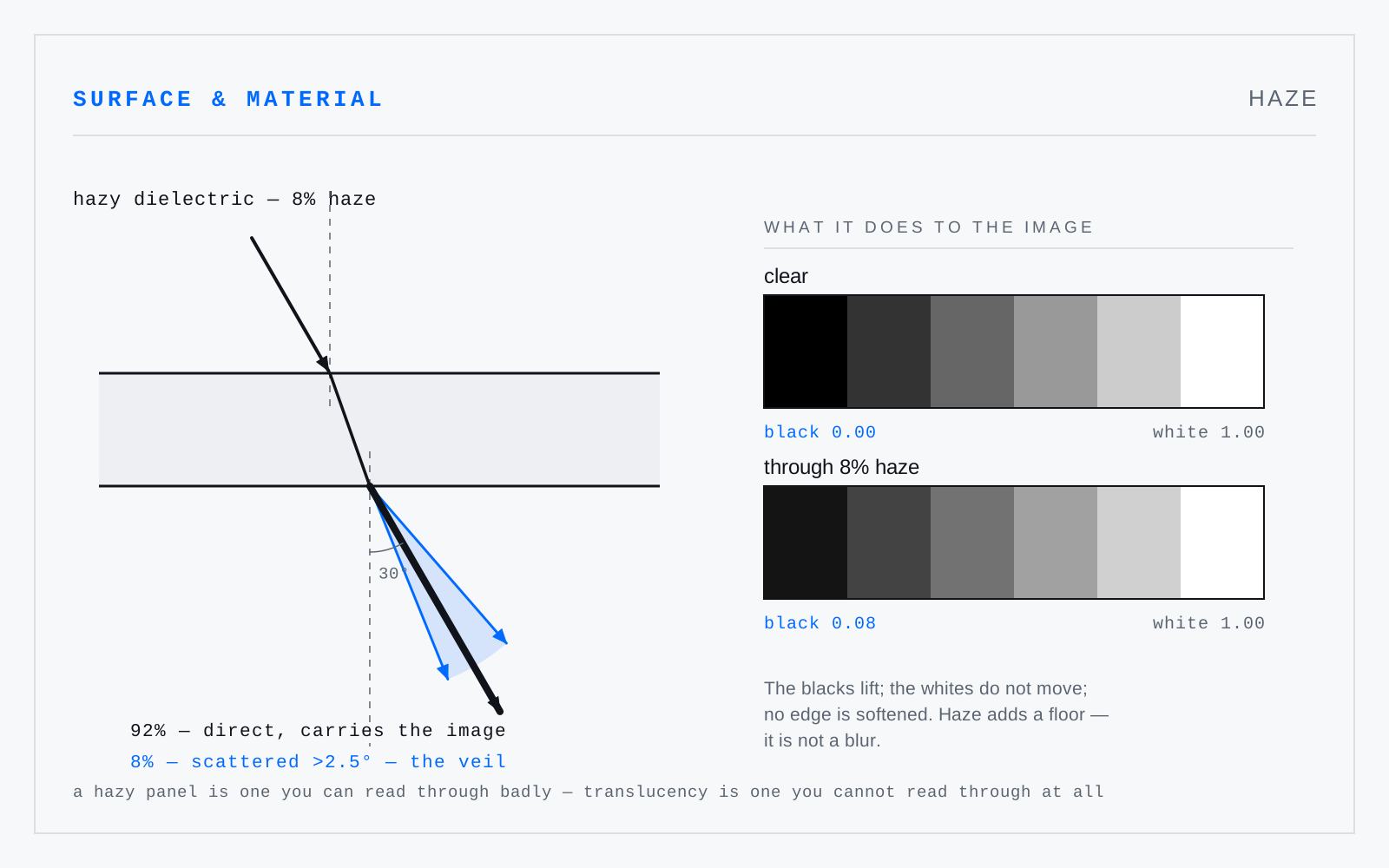
Wide-angle scatter in a material that still transmits an image: the image comes through, but a milky veil sits over it and the blacks behind it lift. Defined as the fraction of transmitted light deviating more than 2.5° from the beam, so acrylic and glass are quoted on it as a number.
In practice
The transmissive counterpart of veiling glare, and it behaves the same way — it adds a floor everywhere rather than blurring anything. Distinguish it from translucency, which is scatter so complete that no image survives at all: a hazy panel is one you can read through badly.
Not to be confused with
- TranslucencyTransmission with scattering: light passes through but its direction is randomized on the way, so the material glows without carrying an image. Frosted glass, vellum, thin marble, a paper lampshade. What survives is brightness and color; what does not is anything you could focus or read.
- TransparencyTransmission without scattering: light crosses the material with its direction preserved — bent by the IOR, but coherently — so an image survives the trip and stays legible. Clear glass, water, acrylic. Any loss of clarity is haze or absorption creeping in, not a lower degree of transparency.