Design Nomenclature / Surface & Material
Normal map
Also called tangent-space normal map, bump normal map
This entry has not been translated yet and is shown in English.
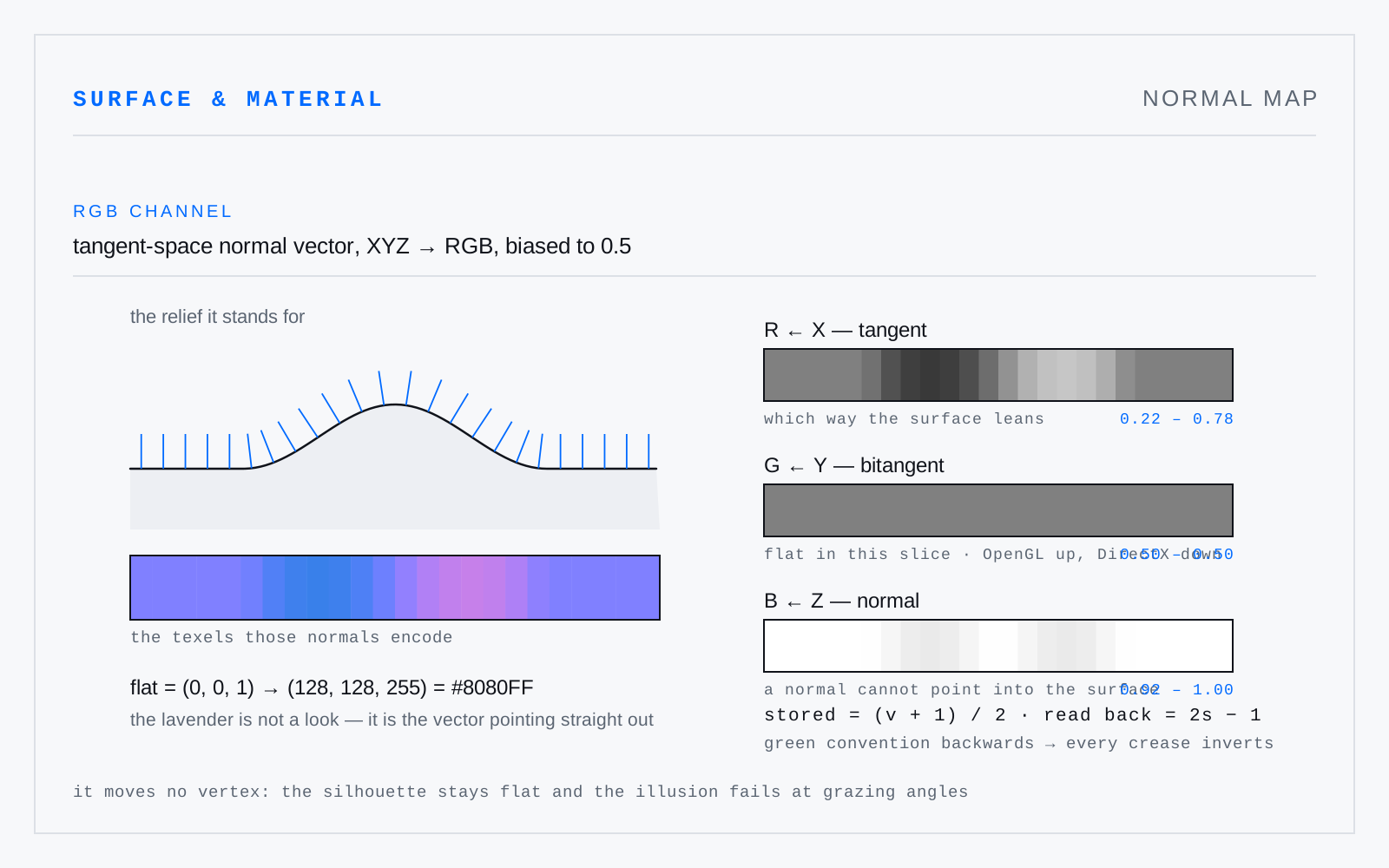
A texture encoding a perturbed shading normal per texel, XYZ packed into RGB, usually in tangent space so it survives deformation. It changes the vector lighting is computed against without moving a single vertex, so silhouettes stay flat, nothing self-shadows, and the whole illusion fails at grazing angles.
In practice
Green-channel convention splits the industry: OpenGL up, DirectX down. Getting it backwards inverts every crease and reads as lit from the wrong side.
Not to be confused with
- Bump mapA grayscale texture read as height, from which the shader derives a normal perturbation by differencing neighboring texels. Encodes the same end result as a normal map at lower precision and without the ability to state direction independently of slope. Cheap, lossy, and still the right call for fine noise.
- Displacement mapA texture whose values move real surface points, normally along the normal, so silhouette, occlusion, and cast shadows all change with it. It needs tessellation or ray-level evaluation to pay for. Height and bump maps hold identical data; displacement is the only one that spends it on geometry.
- Cavity mapA texture recording concavity at detail scale — the tight creases, pits, and panel lines, not the form. Usually multiplied into diffuse or specular to suggest the dirt and light loss that collect in a crevice. Narrower and higher in frequency than ambient occlusion, which measures hemispherical visibility at form scale.