Design Nomenclature / Type
Vox-ATypI
Also called Vox classification, Vox system
This entry has not been translated yet and is shown in English.
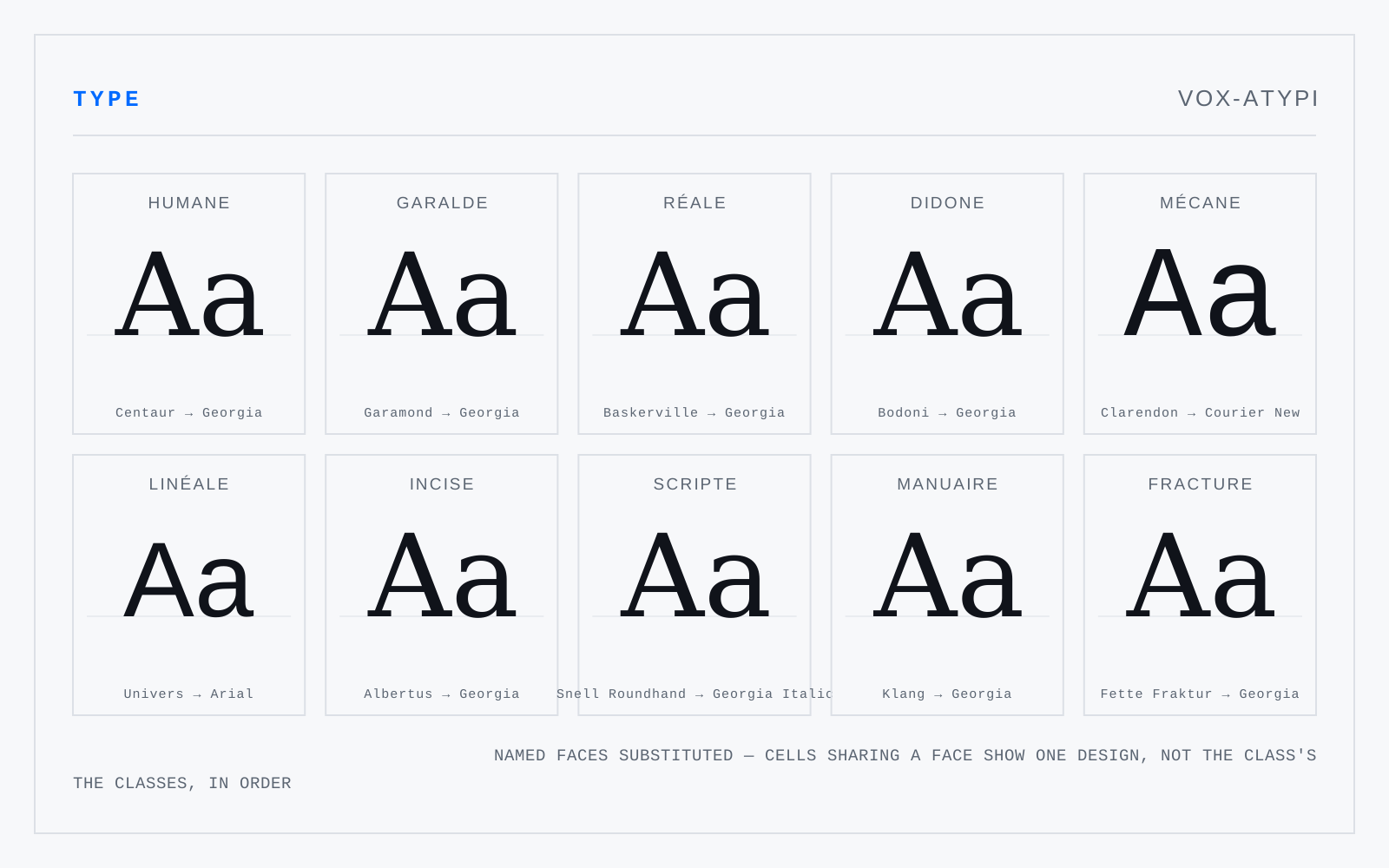
Maximilien Vox's 1954 nine-class scheme, adopted by ATypI in 1962 and extended to eleven. ATypI withdrew it in 2021: it conflates historical period, formal feature and technology; its later classes are incoherent grab-bags; and it treats non-Latin scripts as an afterthought bolted on at the end.
In practice
Its class names — garalde, didone, mécane — survive as useful shorthand and are worth knowing. The system as a taxonomy does not; nothing has replaced it, and that is the honest state of the art.
Origin
The class names are portmanteaus of the designers who defined them: Garalde from Garamond and Aldus, Didone from Didot and Bodoni, Réale from the Romain du Roi.