Design Nomenclature / Form & Geometry
Chamfer
Also called bevel, arris break, edge break
This entry has not been translated yet and is shown in English.
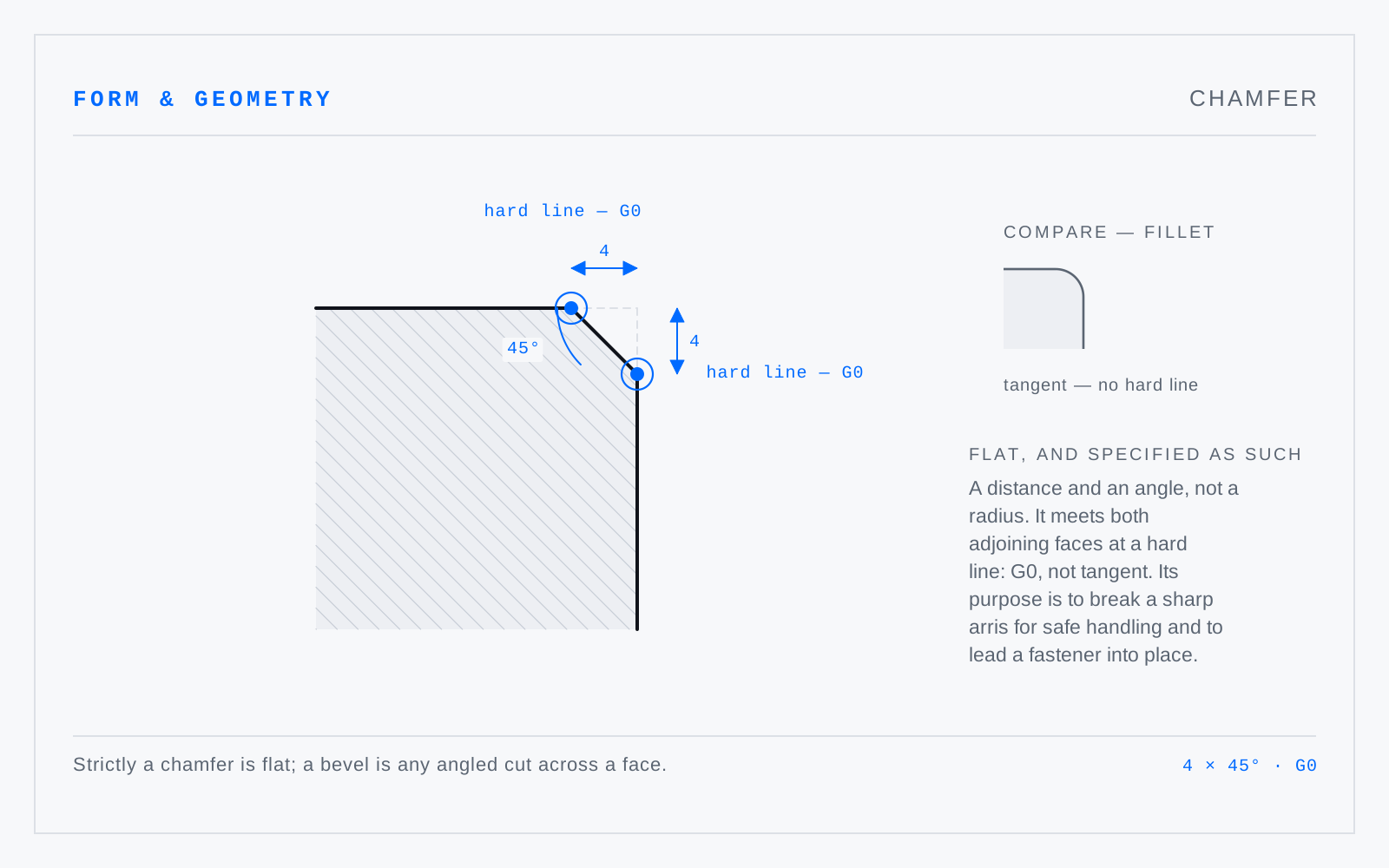
A flat facet cutting across an edge at an angle — typically 45°, and specified as a distance and an angle rather than as a radius. It meets both adjoining faces at a hard line: G0, not tangent. Its purpose is to break a sharp arris for safe handling and to lead a fastener or a mating part into place.
In practice
Strictly, a chamfer is flat and a bevel is any angled cut across a whole face — the edge of a mirror. Machinists hold that line; DCC tools do not, and 'bevel' there is the operation that makes chamfers, fillets, and everything between.
Not to be confused with
Origin
Old French chanfraindre, from chant (edge, via Latin cantus) plus fraindre (to break) — literally to break the edge, which is precisely what it does.