Design Nomenclature / Digital Model Making
Tessellation
Also called tessellate, runtime subdivision, dicing
This entry has not been translated yet and is shown in English.
Subdividing a surface into more polygons at evaluation time, so there are vertices to move or shade. Displacement depends on it — a map cannot push a point that does not exist. Density is usually driven by screen size or edge length, which means the geometry changes as the camera does.
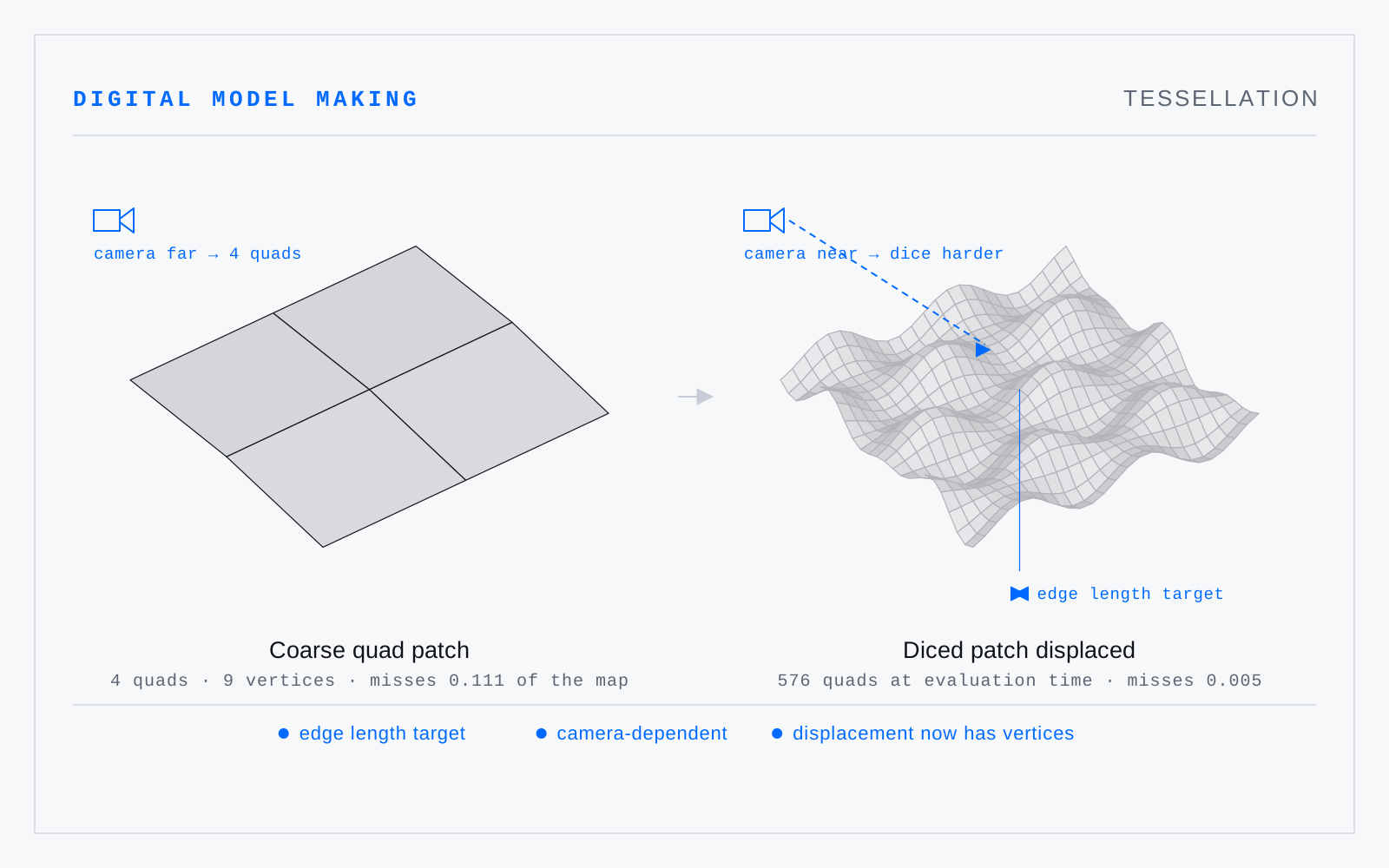
In practice
Also the flat-pattern sense: tiling a plane with repeated shapes, which shares the word and nothing else. In a renderer it means only "make more triangles, now", and it is the cost nobody budgets for when they reach for a displacement map.
Not to be confused with
- Subdivision SurfaceA smooth limit surface defined by a coarse control mesh — the cage — plus a refinement rule applied repeatedly. You edit the cage; the surface you see is derived from it and lies inside it. Sharpness comes from local density or explicit creases, not from a curve degree.
- LODA set of alternative representations of one asset at decreasing complexity, swapped by screen coverage or distance so the renderer spends detail where it can be seen. Authored deliberately, since silhouette and material must survive the switch. The transition is the hard part — a visible pop is a failed LOD.