Design Nomenclature / Surface & Material
Brushed finish
Also called brushed, hairline finish, satin metal, directional finish
This entry has not been translated yet and is shown in English.
The look of a directional abrasive pass: parallel micro-grooves that stretch the highlight across the lay and make the surface change brightness as you rotate it. Graded by grit, hairline being the fine end. It buries the fingerprints and machining marks a polish would put on display.
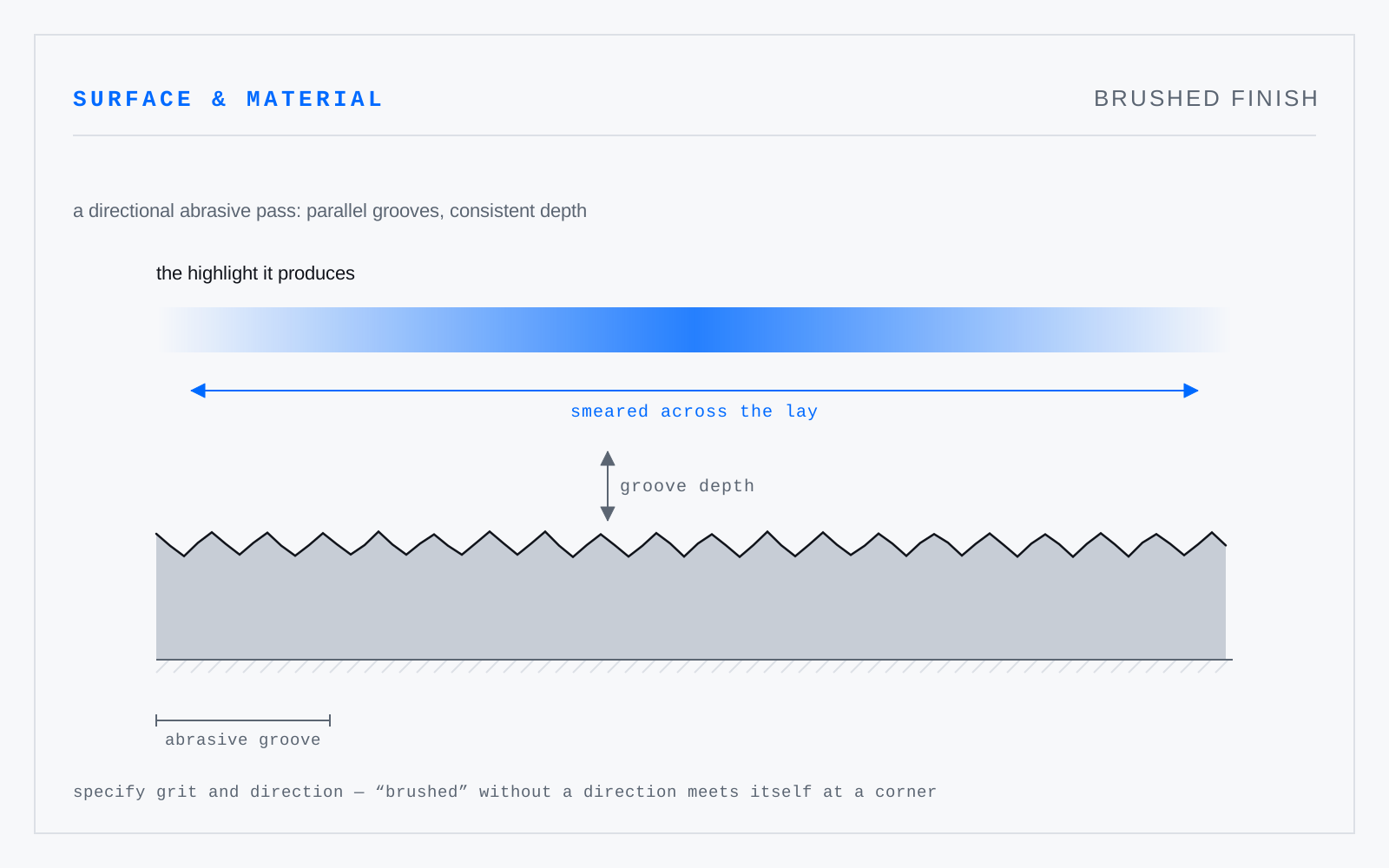
In practice
Specify grit and direction. "Brushed" without a direction gets you panels that meet at a corner with the grain running two ways.
Not to be confused with
- Polished finishAn abrasive progression taken until the remaining scratches are shorter than a wavelength of visible light, at which point the surface reflects near-specularly and returns a readable image of the room. It shows every later scratch and every underlying form error, which makes it the least forgiving finish to specify.
- Bead-blasted finishThe uniform, non-directional matte produced by driving media against a surface at pressure, leaving randomly oriented micro-craters. Because the roughness has no lay, the highlight stays soft from every angle. Media size sets the grade; the process also cleans and slightly work-hardens what it hits.
- AnisotropyRoughness that differs along two tangent directions, stretching the highlight perpendicular to the surface's structure. Produced by anything unidirectional: brushed metal, hair, vinyl, satin weave. It needs a tangent frame to orient against, so it inherits every flaw in the UV layout and shears wherever the layout does.