Design Nomenclature / Systems & Spec
Point
Also called pt, DTP point, PostScript point, typographic point
This entry has not been translated yet and is shown in English.
The unit of type size, standardised as exactly 1/72 inch by PostScript and every application since. Historically it was never one thing: the Anglo-American point ran near 1/72.27 inch, the Didot point near 0.376 mm, Fournier's smaller again — which is why old specimens don't convert cleanly to anything.
In practice
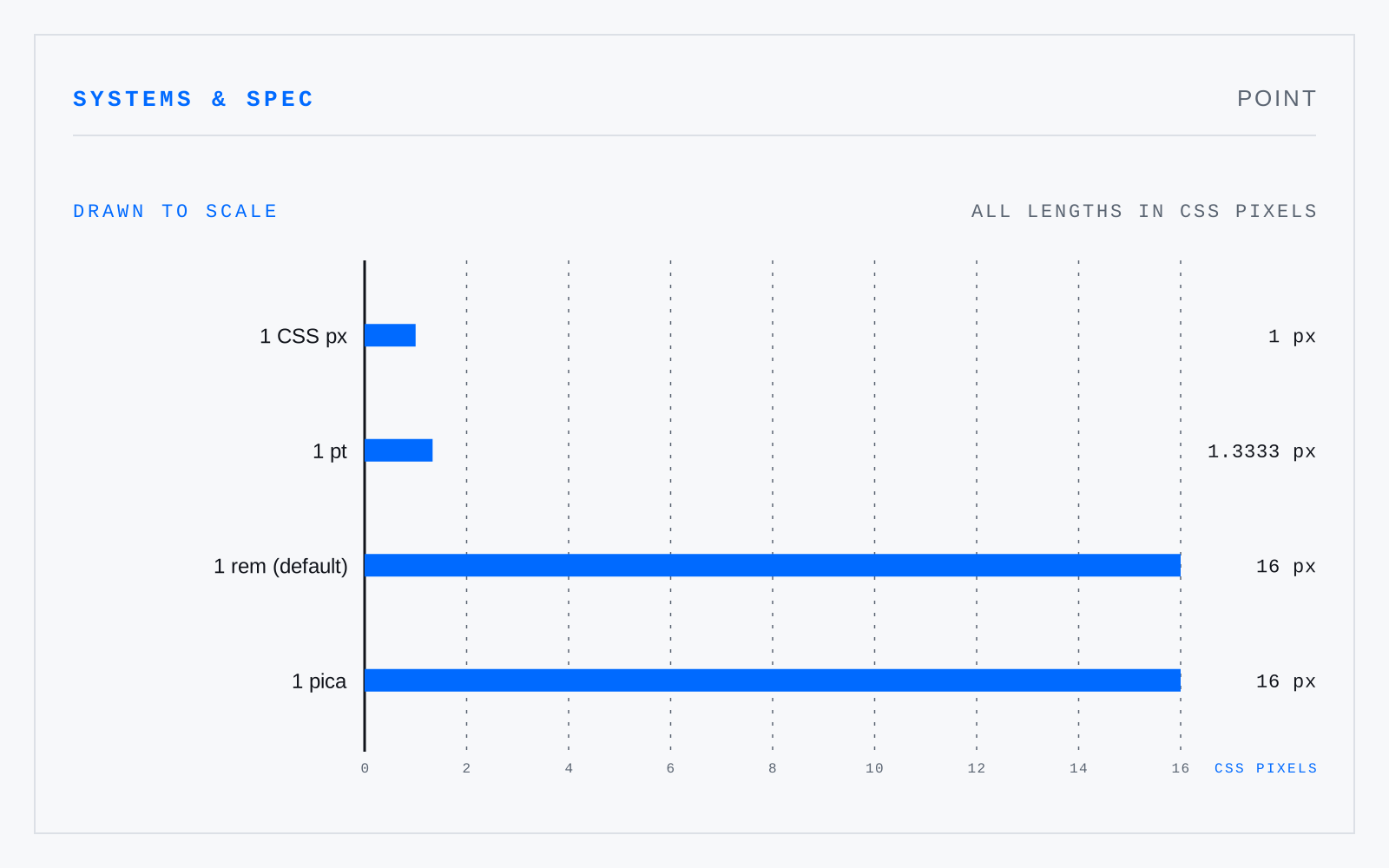
Written into CSS as `pt` by people importing print habits. On screen it is just 1.333 CSS px, and it ignores the reader's font-size preference. Use rem. A point size also names the em — the body — and not any measurable feature of a letter: nothing in a 12pt face measures 12pt, and two 12pt faces can differ by a third in apparent size.
Not to be confused with
- CSS pixelThe abstract unit CSS lengths resolve to: an angular reference — about 1/96 inch at arm's length, a visual angle near 0.0213° — rather than a hardware pixel. It maps to device pixels through the device pixel ratio, so one CSS px is two or three physical pixels on most phones, and more again under zoom.
- RemA CSS length equal to the computed font size of the root element — 16px by default, and whatever the reader has set otherwise. Unlike em it does not compound through nesting, and unlike px it honours a browser font-size preference, which is what makes sizing in rem an accessibility decision rather than a style one.
- EmA relative unit equal to the current type size: at 16px, one em is 16px. It is not the width of an M and never was a measurement of any glyph — it is the height of the body the type is set on, which historically was square at the M's cast width. Every other type metric is expressed as a fraction of it.
- PicaTwelve points, and under the PostScript convention a sixth of an inch — six picas to the inch, seventy-two points. The unit column widths, margins, and page grids were specified in before millimetres took over. Distinct from the typewriter's pica, which meant ten characters to the inch.
Origin
Fournier proposed a typographic point around 1737; Didot re-based it on the French royal inch a generation later; the Anglo-American point was fixed about a century after that. PostScript rounded the whole mess to 1/72 inch in 1984 and the older systems never quite died.