Design Nomenclature / Color
HSB
Also called HSV, hue saturation brightness, hue saturation value
- Color
- Digital Model Making
- 2D & 3D
This entry has not been translated yet and is shown in English.
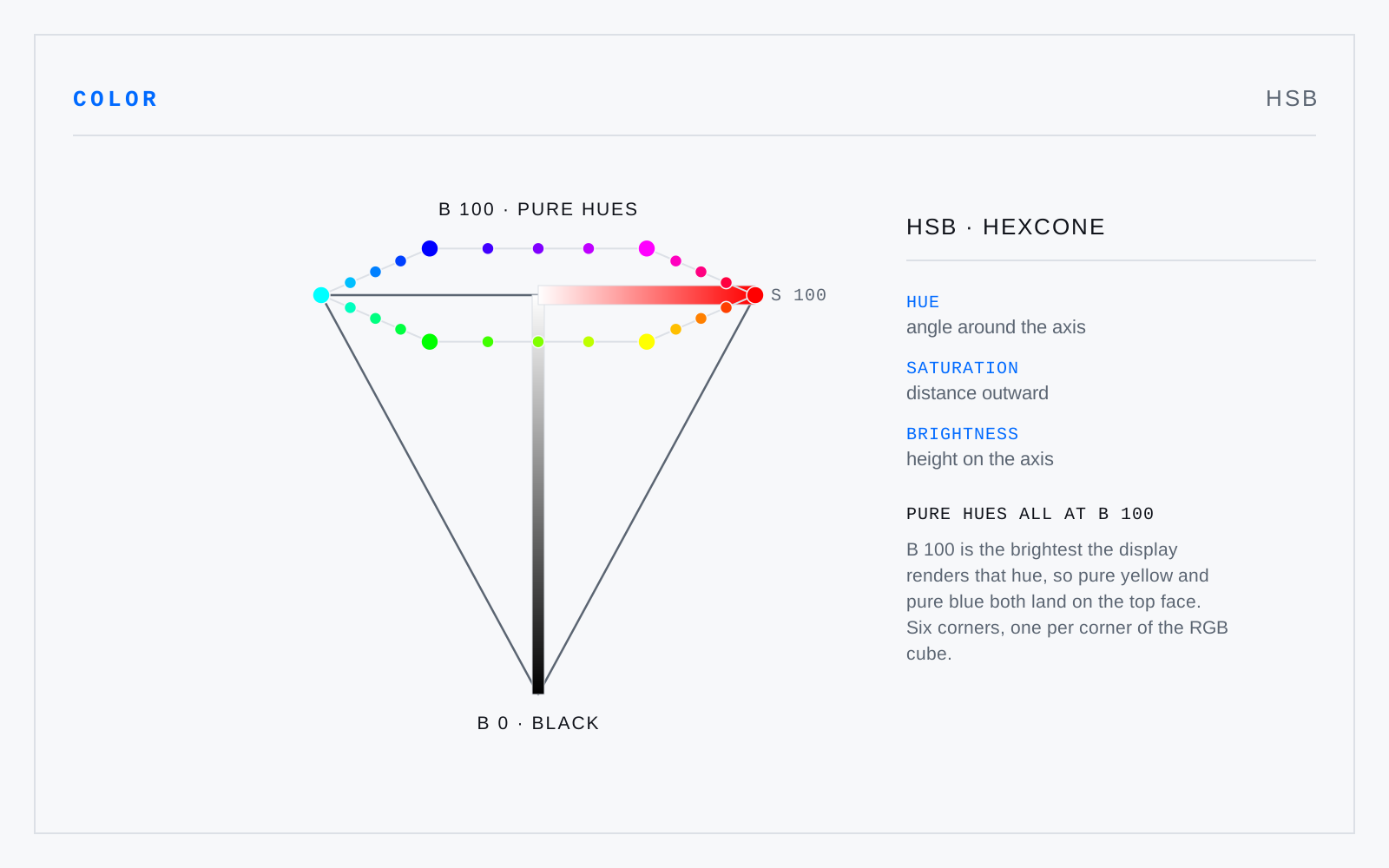
RGB remapped to hue, saturation, and brightness, where B 100% is the brightest the display can render that hue — so pure yellow and pure blue both sit at B 100%. The model is a hexcone where HSL is a bicone. Neither is perceptual, and their S channels are not the same quantity.
In practice
Photoshop's picker is HSB; CSS is HSL. Copying an S value between them silently changes the color — two different measures wearing one letter.
Not to be confused with
- HSLA cylindrical remapping of RGB into hue, saturation, and lightness, with L running 0 to 100% and every fully saturated hue landing at L 50%. That is a fact about the geometry, not about perception: HSL yellow and HSL blue at L 50% differ enormously in the lightness anyone actually sees.
- SaturationChroma judged relative to the color's own brightness — how vivid it appears given how light it is. Being a ratio rather than a distance, saturation holds roughly constant down a shadow gradient where chroma falls: a red wall in shade loses chroma but keeps saturation, which is why it still reads as the same red.
- ValueHow light or dark a color is, independent of hue and chroma — the one attribute that survives conversion to greyscale. Value does the structural work: legibility, depth, and figure-ground separation all rest on value difference far more than on hue difference, and a composition that fails in greyscale was leaning on hue to hide it.