Design Nomenclature / Surface & Material
Bump map
Also called bump, bump texture
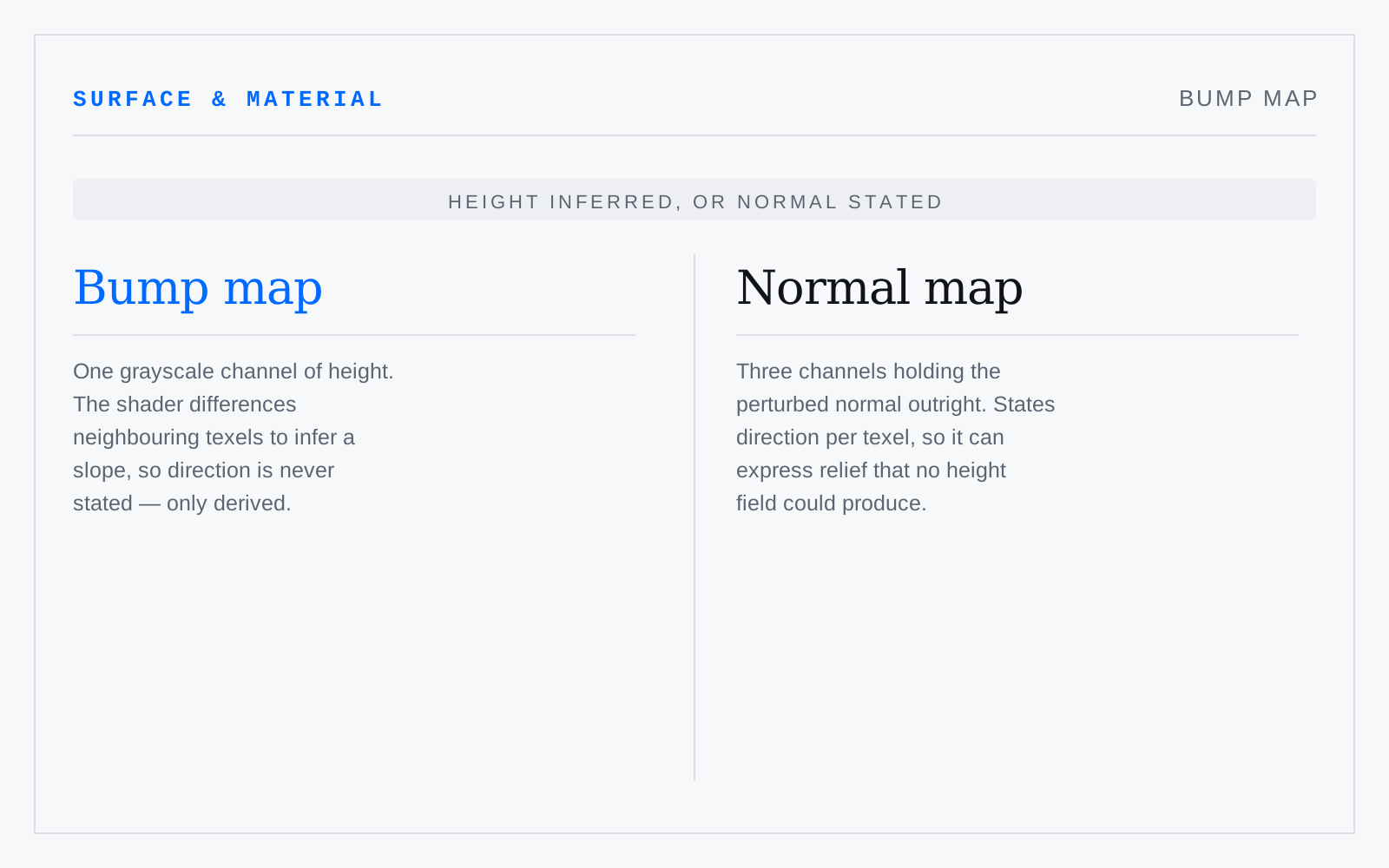
A grayscale texture read as height, from which the shader derives a normal perturbation by differencing neighboring texels. Encodes the same end result as a normal map at lower precision and without the ability to state direction independently of slope. Cheap, lossy, and still the right call for fine noise.
In practice
Often used loosely for any relief-faking map, normal maps included. Height and displacement store the same data; only the consumer differs.
Not to be confused with
- Normal mapA texture encoding a perturbed shading normal per texel, XYZ packed into RGB, usually in tangent space so it survives deformation. It changes the vector lighting is computed against without moving a single vertex, so silhouettes stay flat, nothing self-shadows, and the whole illusion fails at grazing angles.
- Displacement mapA texture whose values move real surface points, normally along the normal, so silhouette, occlusion, and cast shadows all change with it. It needs tessellation or ray-level evaluation to pay for. Height and bump maps hold identical data; displacement is the only one that spends it on geometry.