Design Nomenclature / Light & Optics
Color bleeding
Also called colour bleed, diffuse bleed, colour transfer
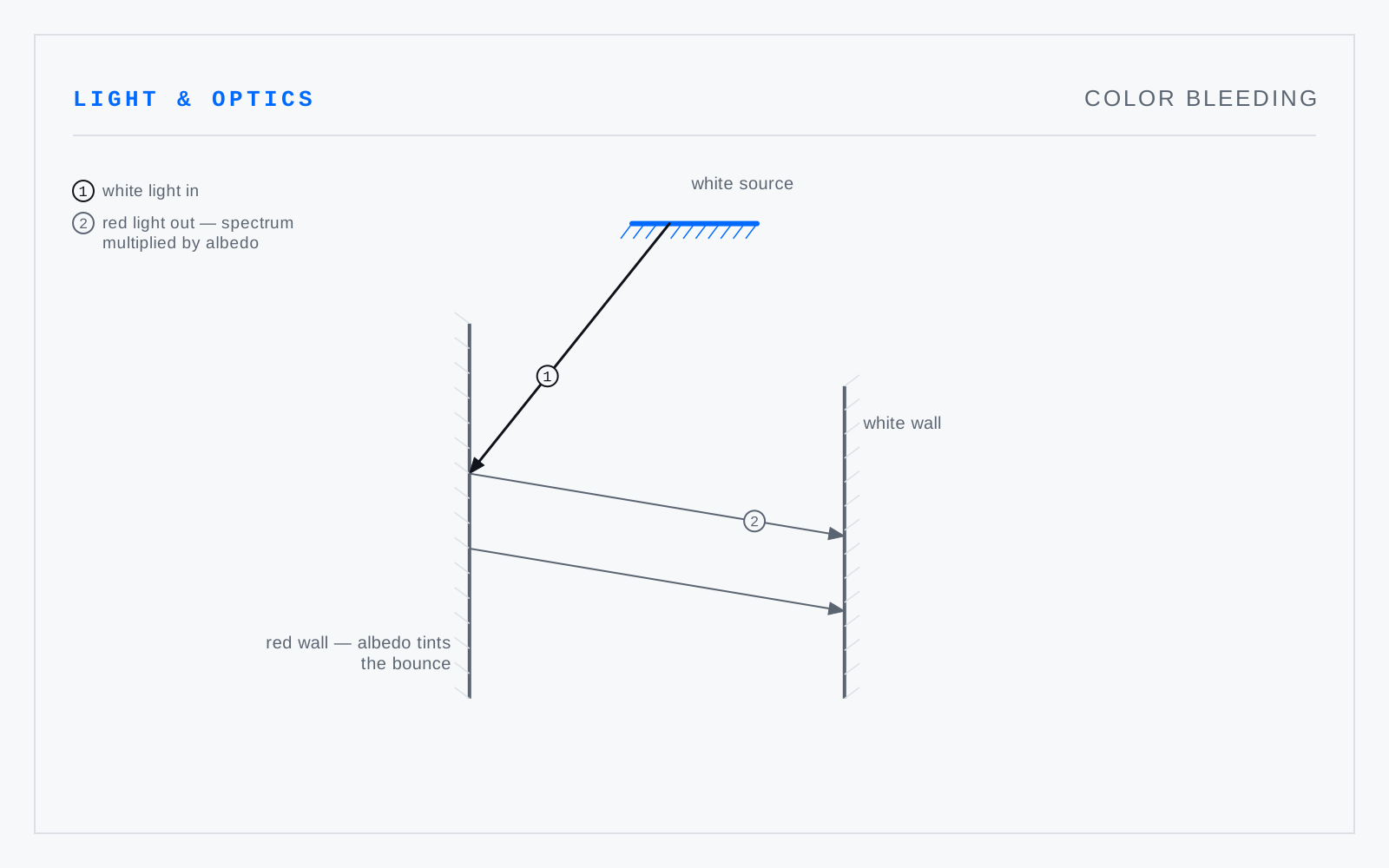
The transfer of a surface's chromaticity onto its neighbours by indirect light: the bounce carries the reflector's spectral albedo, so a red wall lights the white one beside it red. It is the most legible symptom of global illumination, and the first thing missing when it is off.
In practice
Artists routinely dial it down. It is physically correct and, at full strength in an interior of saturated surfaces, reliably reads to a client as a bug.
Not to be confused with
- Indirect lightLight reaching a point only after one or more reflections off other surfaces. It carries their colour, arrives from broad directions rather than from one, and fills form shadows — which is why a scene lit by direct light alone has shadows that go dead black.
- AlbedoThe fraction of incident light a surface returns by diffuse scattering, per wavelength band — the color light acquires after entering a dielectric, bouncing, and leaving. Bounded in practice: real materials rarely exceed 0.9 or fall below 0.03. Under metal/rough conventions the same channel supplies conductors' normal-incidence specular reflectance instead.