Design Nomenclature / Form & Geometry
Gaussian curvature
Also called k, intrinsic curvature, double curvature
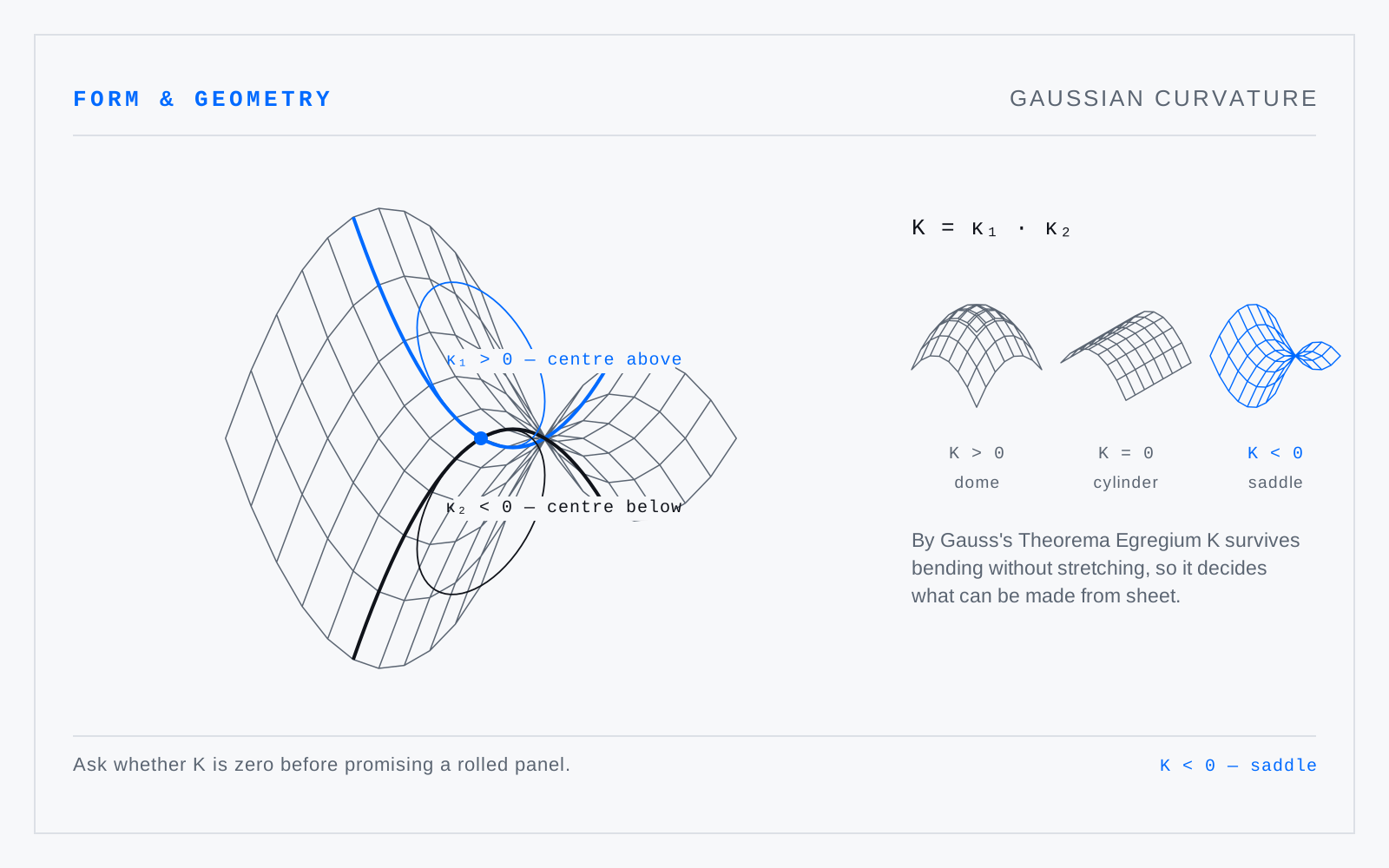
The product of the two principal curvatures at a point, K = κ₁κ₂. Positive on a dome where both bend the same way, negative on a saddle where they oppose, zero wherever either one is zero — on a plane, a cylinder, a cone. By Gauss's Theorema Egregium K survives bending without stretching, so it decides what can be made from sheet.
In practice
The reason a flat pattern exists for a cone and not for a sphere, and the reason a dart, a shrink, or a stretch-form is unavoidable in metal and cloth. Ask whether K is zero before promising a rolled panel.