Design Nomenclature / Color
Halftone
Also called screen, halftone screen, dot screen
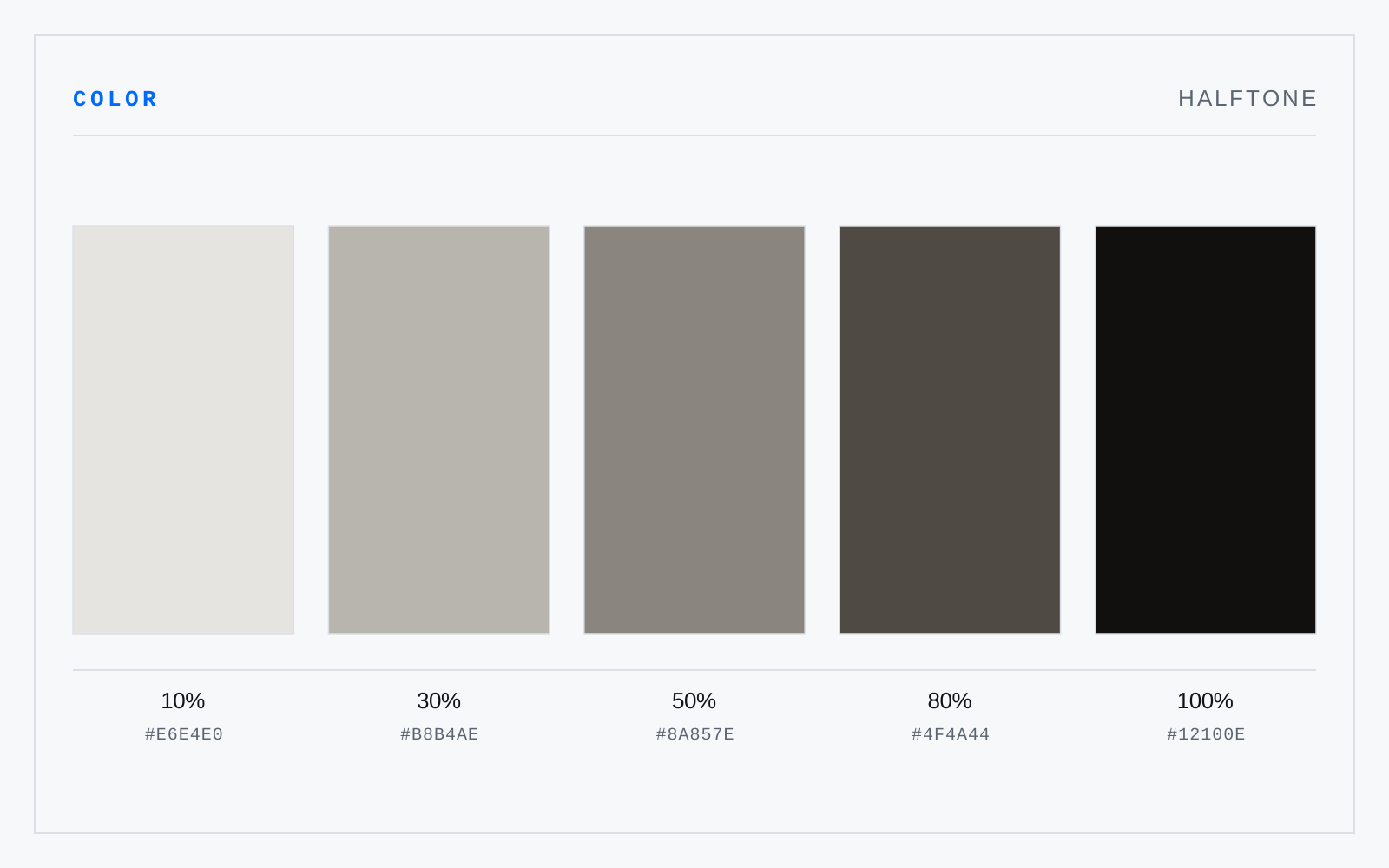
Continuous tone simulated by dots of varying size on a fixed grid, because a press can lay ink or not lay ink and nothing in between. Apparent value comes from the proportion of paper covered and the eye does the averaging. Screen frequency and angle decide whether it reads as tone, as pattern, or as moiré.
Not to be confused with
- DitheringDistributing quantization error across neighbouring pixels so a limited palette approximates colors it does not contain. Ordered dithering thresholds against a fixed matrix and shows its grid; error diffusion pushes each pixel's residue onto its unprocessed neighbours and looks organic. Both trade visible noise for the banding that plain rounding would give.
- Partitive mixingMixing that happens in the eye rather than in the medium: marks too small to resolve individually average into one percept, weighted by the area each occupies. Neither additive nor subtractive — no light is summed and no colorant is combined. Halftone, pointillism, weaving, and every RGB subpixel depend on it.
- TintA hue with white added — lighter and, in pigment, lower in chroma than the parent. Tinting raises value while pulling toward the achromatic axis, which is why pastels read as soft rather than merely pale: the white dilutes the colorant as it lifts it.