Design Nomenclature / Composition
Harmony
- Composition
- Color
- 2D & 3D
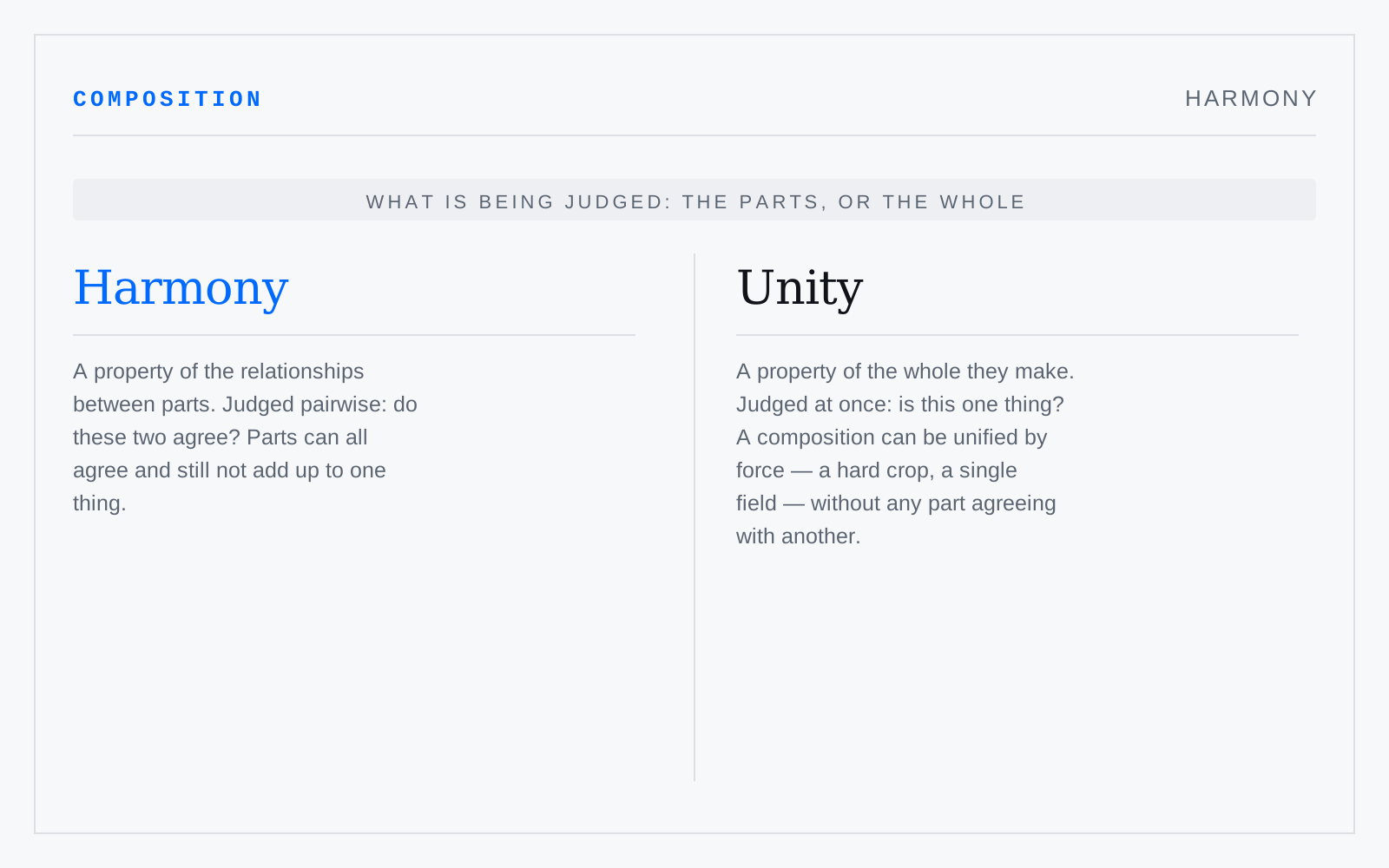
Agreement among parts that differ — elements drawn from a common family, related by shared proportion, angle, or interval, so they read as belonging together. Harmony concerns the relationship between parts; unity concerns the whole they make. Harmonious parts can still fail to make one thing.
In practice
Borrowed from music, and mostly used to mean 'nothing clashes'. Colour gives it a specific technical sense — schemes derived from wheel relations — that composition does not share.
Not to be confused with
- UnityThe condition of a composition reading as one thing rather than an assembly of parts, produced by repetition, alignment, proximity, and a deliberately limited vocabulary. Unity on its own is monotony; the counterweight is variety — enough difference to hold attention without breaking the whole.
- Color harmonyThe doctrine that certain hue relations are inherently agreeable, read off fixed angles on a wheel: complementary, analogous, triadic, tetradic. The relations are real geometry. The pleasure they are said to guarantee is not — value and proportion decide whether a palette works, and the wheel knows about neither.