Design Nomenclature / Composition
Linear perspective
Also called perspective, one-point perspective, two-point perspective
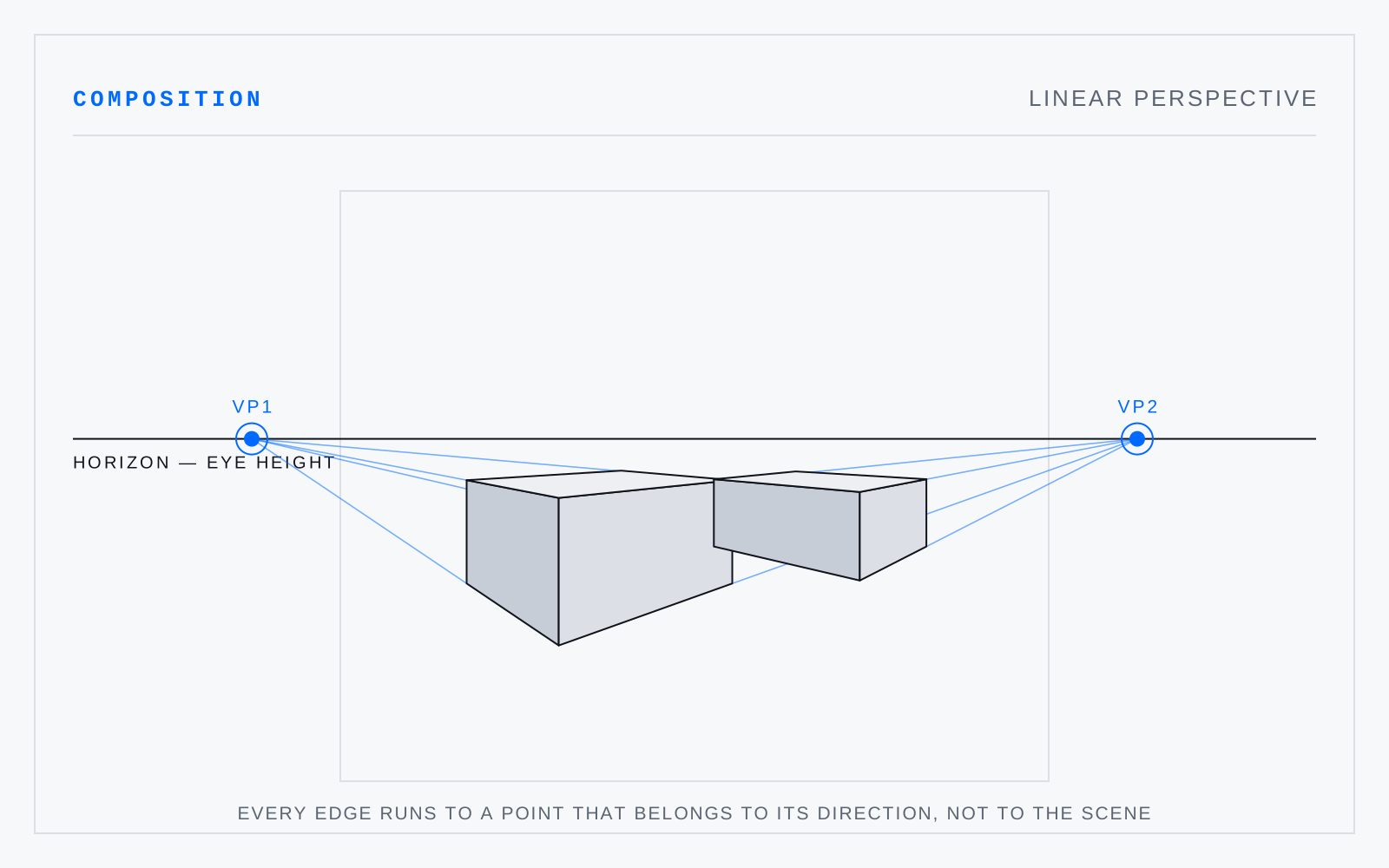
A geometric construction projecting a three-dimensional scene onto the picture plane from one fixed eye point, so that parallel lines converge at vanishing points on a horizon set at eye height. Formalized by Brunelleschi and Alberti in the fifteenth century. It is a drawing system, not a description of vision.
In practice
'One-, two-, three-point' counts the vanishing points of the box you happen to be drawing, not of the scene. A scene has as many as it has sets of parallels.
Not to be confused with
- Atmospheric perspectiveDepth read from the air itself: distant forms lose contrast, shift toward the sky's colour, and soften at the edge, because scattering fills the intervening volume. A tonal cue independent of geometry — it works on a shapeless field, where linear perspective has nothing to converge.
- ForeshorteningThe compression of a form's apparent length as it turns away from the picture plane — the same projection that produces convergence, applied to one object. A forearm pointed at the viewer occupies almost no length, and all its information migrates into contour, overlap, and shading.