Design Nomenclature / Form & Geometry
Loft
Also called skin, lofted surface, sections
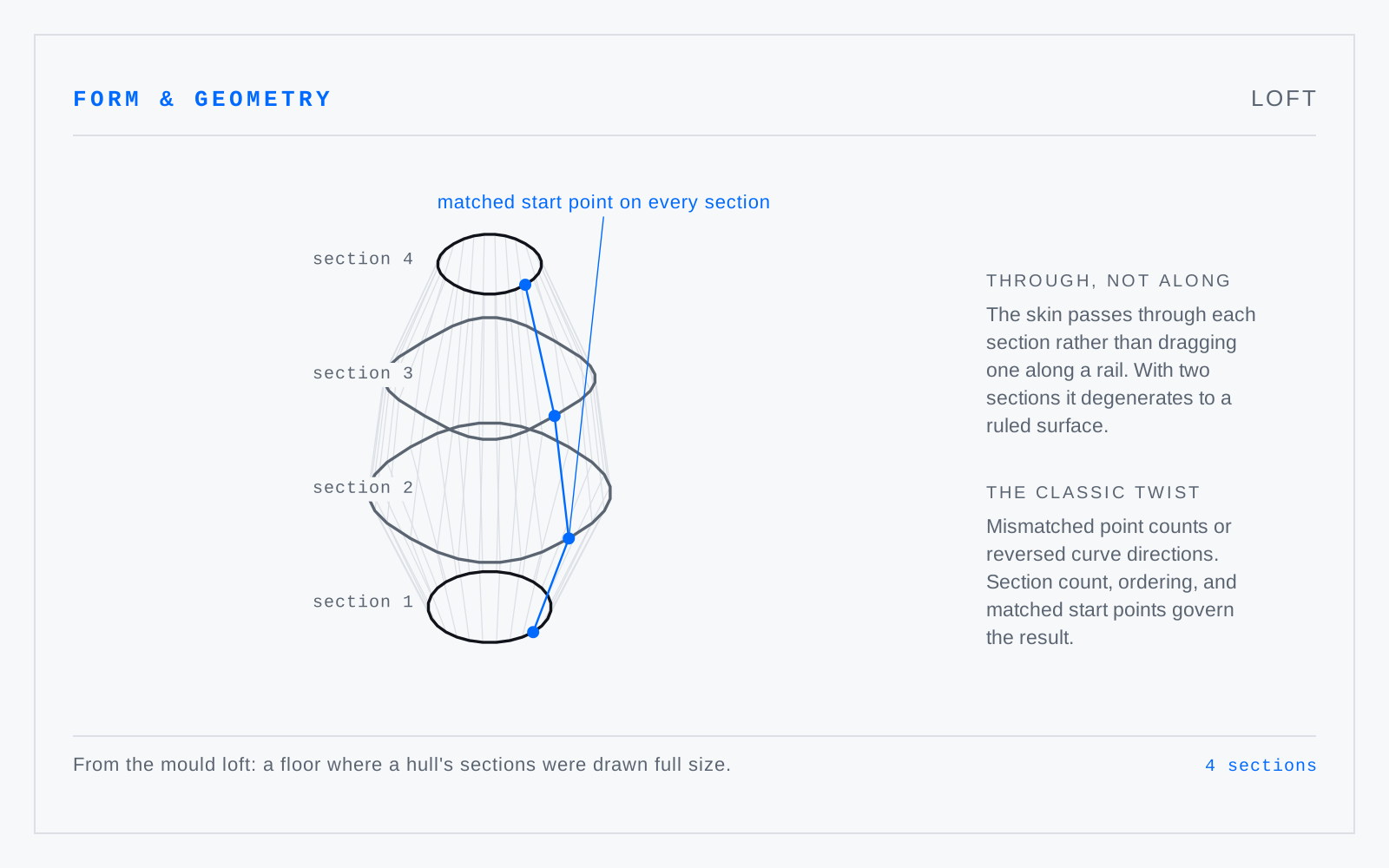
Building a surface through a series of profile curves placed along a form — the skin passes through each section rather than dragging one along a rail. Section count, section ordering, and matched start points govern the result; mismatched point counts or reversed curve directions produce the classic twist. With two sections it degenerates to a ruled surface.
Not to be confused with
- SweepMoving a profile along a path curve, generating surface as it goes, with the profile's orientation set by a rule — held fixed, kept normal to the path, or governed by a second rail. A revolve is the special case where the path is a circle about an axis; an extrude is the case where it is a straight line.
- ExtrudeSweeping a profile along a straight path, generating surface behind it. A closed profile extruded gives a prism — the operation that makes a cube from a square and an I-beam from its cross-section. In a mesh, extruding a face leaves the original face's edges as a new loop; leaving that face itself in place is what buries an internal wall.
Origin
From the mould loft of a shipyard: a long floor where a hull's sections were drawn out full size and faired before any timber was cut. Lofting named the drawing, then the surface.