Design Nomenclature / Digital Model Making
Photogrammetry
Also called photo scanning, structure from motion, SfM
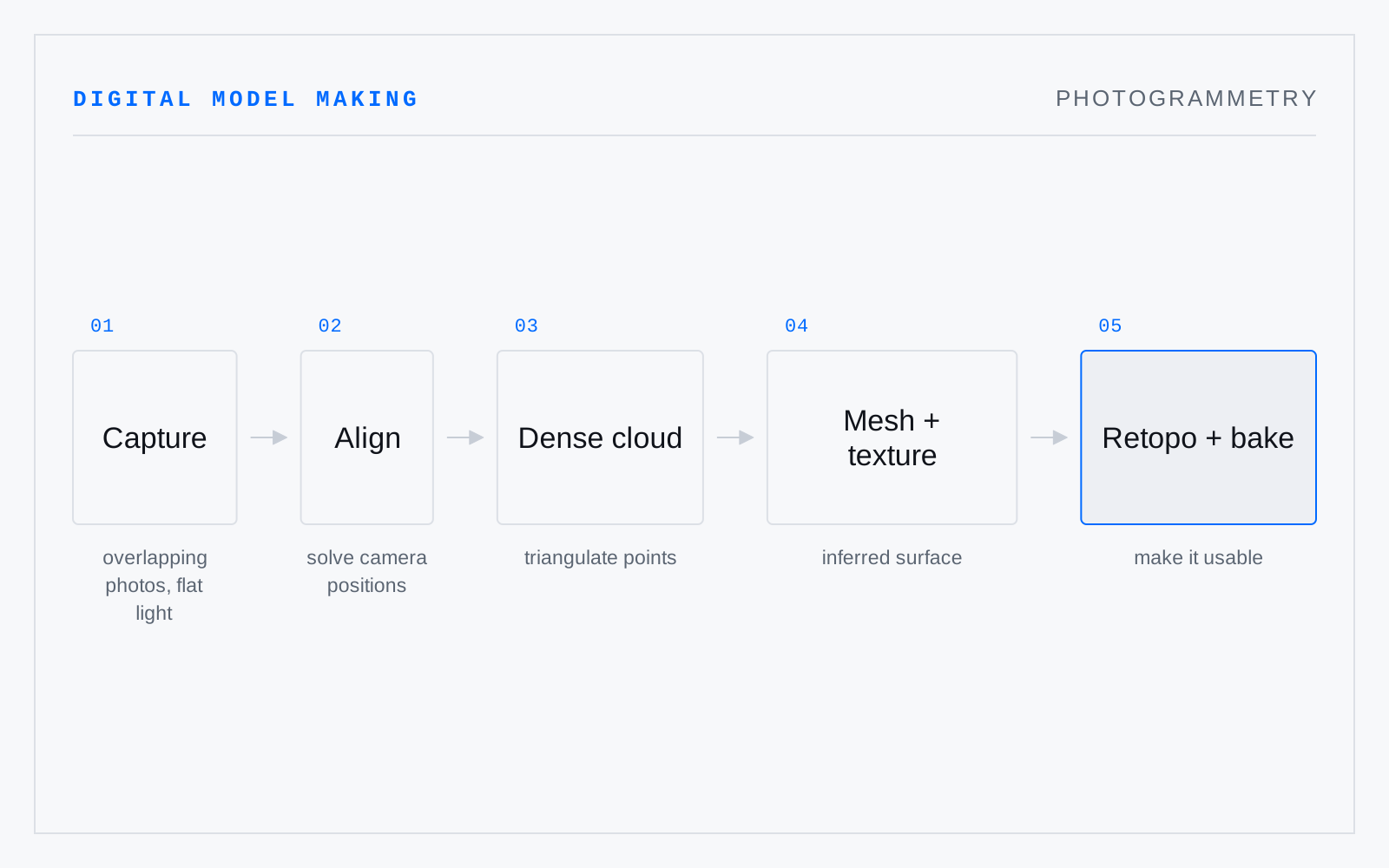
Reconstructing geometry from overlapping photographs by matching features across views, solving for camera positions, and triangulating a dense point cloud. It needs texture to match on: matte, detailed, evenly lit surfaces resolve, while gloss, glass, and flat white do not. Scale comes only from a reference placed in the scene.
In practice
Often used for the whole pipeline through to a retopologized, baked asset. The capture is the easy half, and the lighting you shot in is in the texture forever.
Not to be confused with
- 3D ScanningMeasuring a real surface directly: structured light projects a known pattern, laser triangulation sweeps a line, time-of-flight times a return. All produce range data in the instrument's own frame, and multiple passes must be registered together. Accuracy here is a specification — unlike photogrammetry's, which is an outcome.
- Point CloudAn unstructured set of measured 3D points, often with colour and estimated normals, and with no connectivity: no edges, no faces, no surface. It is data, not a model. Everything downstream — meshing, normal estimation, hole filling — is inference, and noise, occlusion, and registration error are already in it.
Origin
Photo, gramma, metron — measuring from drawings made by light. It began as a nineteenth-century aerial-survey discipline, which is why the maths is camera-solving rather than modeling.