Design Nomenclature / Composition
Proximity
Also called nearness, grouping by proximity
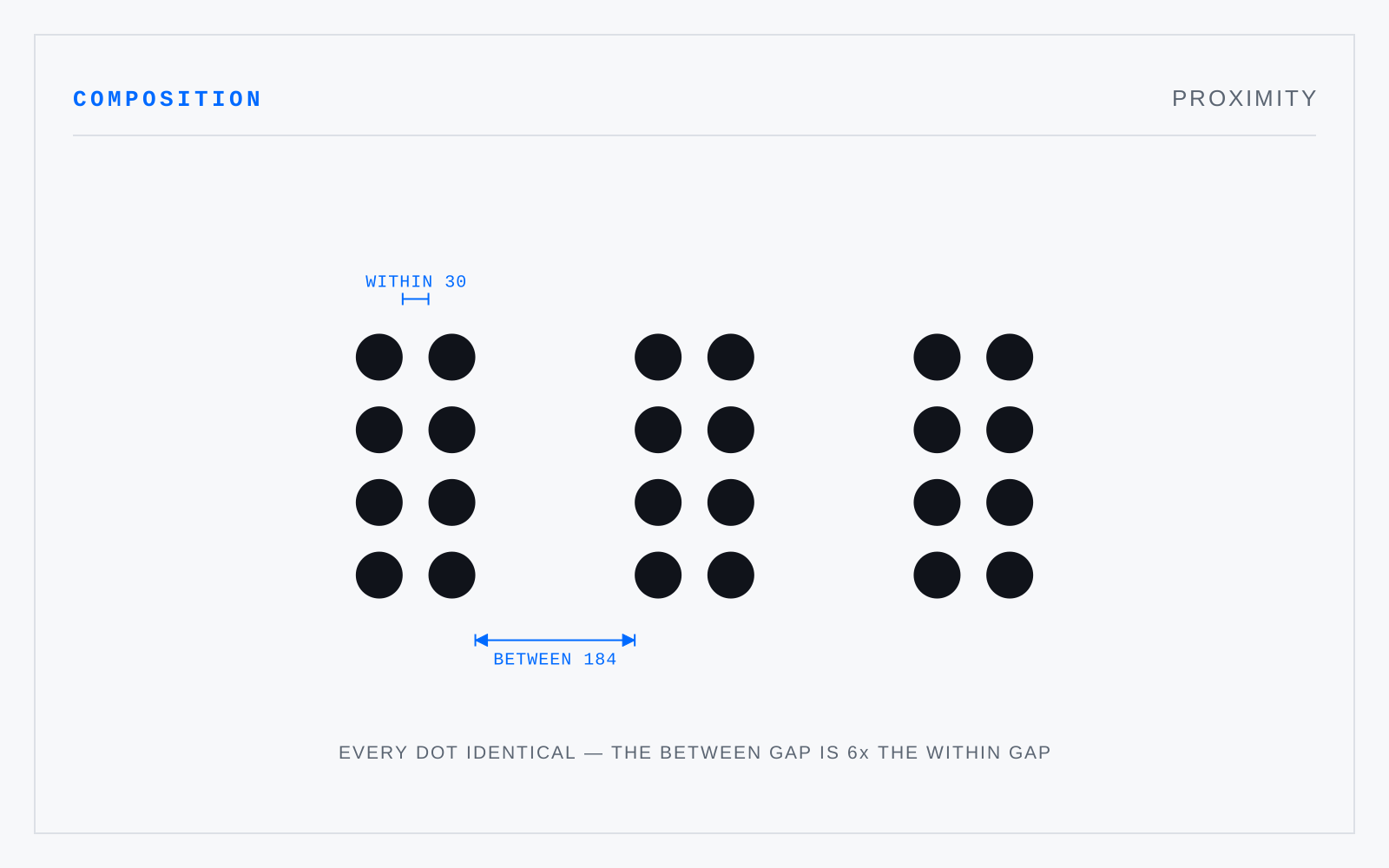
Elements near one another read as a group before any other cue is weighed. Distance does the work, and it is relative: a field is parsed by comparing gaps across it, not by measuring any one. Where proximity and similarity conflict, proximity usually wins.
In practice
This is the whole argument for a spacing system. The gap between a label and its field must be smaller than the gap to the next field, or the label joins the wrong one.
Not to be confused with
- Common regionElements inside a shared bounded area group together even when proximity and similarity argue otherwise. The boundary can be a rule, a tint, or a shadow, and need not be closed. Palmer added it to the classical set in 1992; it reliably beats proximity when the two are set against each other.
- Uniform connectednessA visibly connected region — elements joined by a line, a bar, or an unbroken fill — reads as a single unit. Palmer and Rock proposed it in 1994 as prior to the classical principles: connection groups first, and proximity and similarity only get a vote on what is left.