Design Nomenclature / Digital Model Making
Tiling
Also called tileable texture, seamless texture, repeat
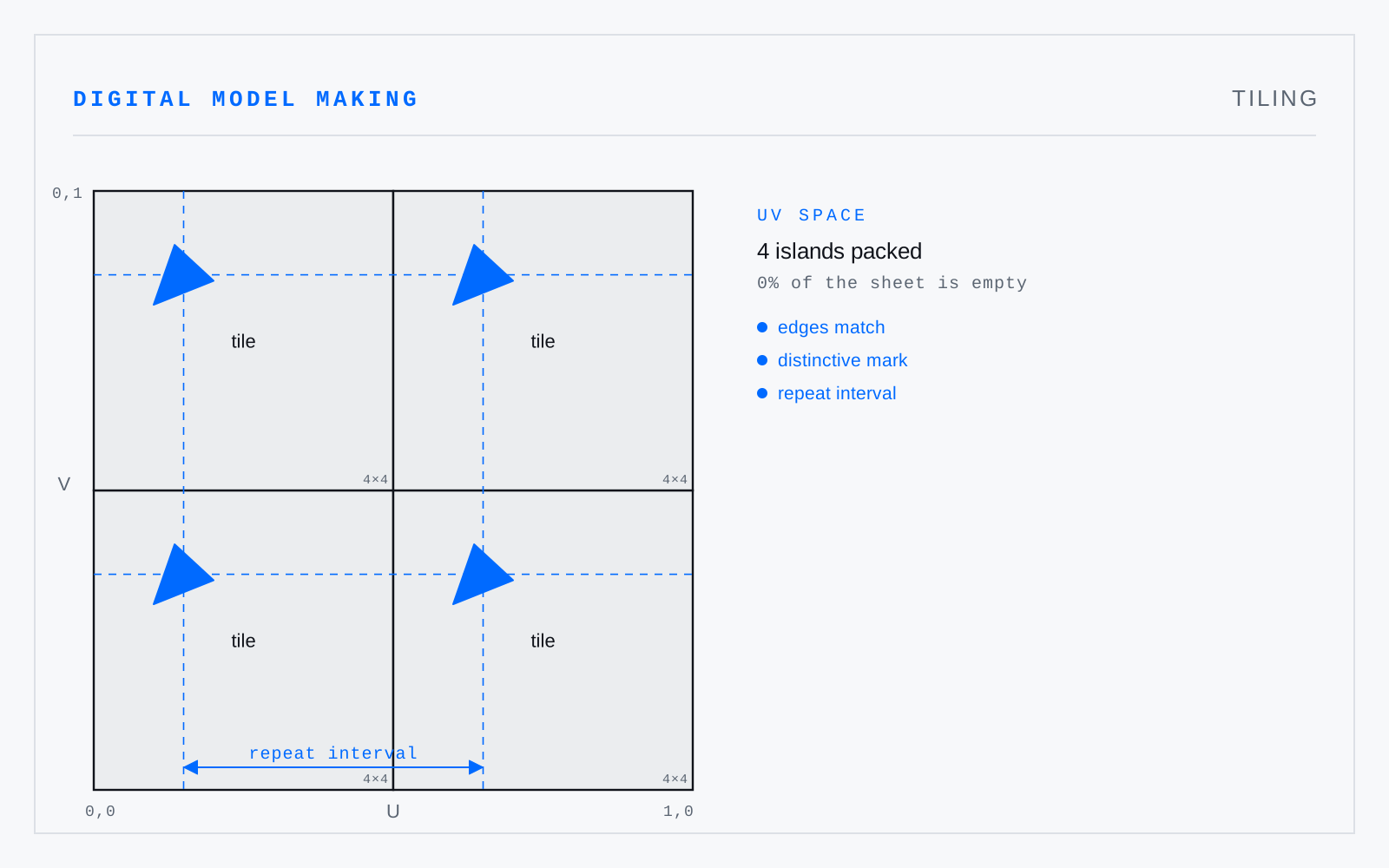
Building a texture so that opposite edges match, letting it repeat over an unbounded surface from a small map. The technical requirement — edge continuity — is easy. The design requirement is not: any distinctive mark becomes a visible lattice at the repeat interval, and that lattice is what the eye actually finds.
In practice
“Seamless” describes the edges, not the result. A tile with no seams can still read as an obvious grid; fixing it needs variation, decals, or a second-frequency blend.
Not to be confused with
- Trim SheetA single texture holding a strip of reusable details — panel edges, mouldings, plates, seams — which geometry is mapped onto by sliding UV shells over the strip rather than unwrapping each piece uniquely. One material and one draw call can carry a whole environment. It forbids anything genuinely unique.
- UV UnwrapAssigning every vertex a coordinate in a 2D texture space so the surface can be laid flat and painted. Anything curved in two directions must be either cut or distorted — this is the cartographer's problem, and there is no solution, only a choice. The cuts are seams; the flattened pieces are islands.