Design Nomenclature / Surface & Material
Transparency
Also called transparent, clarity
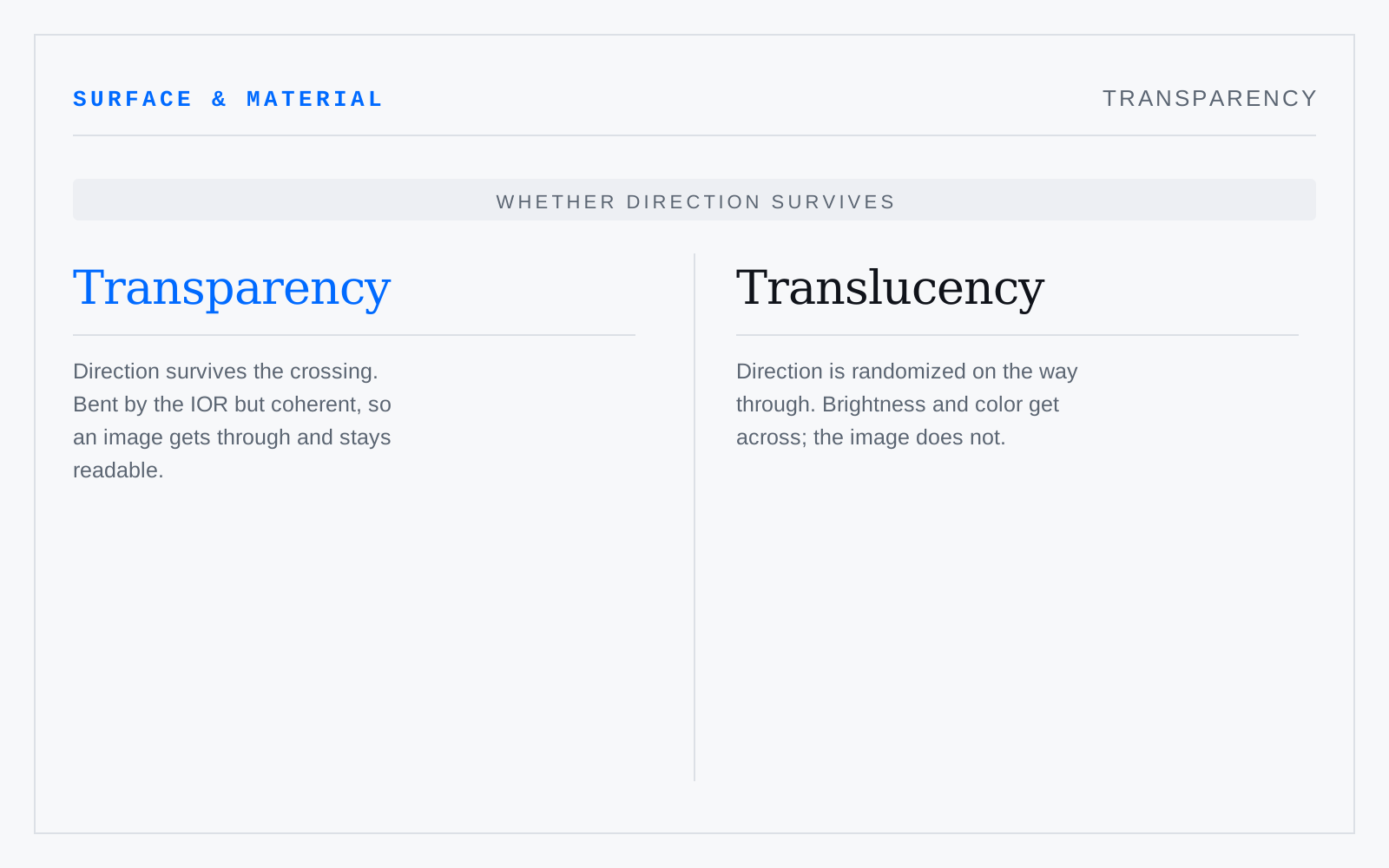
Transmission without scattering: light crosses the material with its direction preserved — bent by the IOR, but coherently — so an image survives the trip and stays legible. Clear glass, water, acrylic. Any loss of clarity is haze or absorption creeping in, not a lower degree of transparency.
In practice
In UI and compositing it means something else entirely: alpha. A transparent PNG is not optically transparent; it is partly absent.
Not to be confused with
- TranslucencyTransmission with scattering: light passes through but its direction is randomized on the way, so the material glows without carrying an image. Frosted glass, vellum, thin marble, a paper lampshade. What survives is brightness and color; what does not is anything you could focus or read.
- OpacityHow much a surface blocks light passing through it, stored per texel or set per material. A compositing quantity rather than a physical one: it blends the surface over what lies behind without refracting, tinting by path length, or conserving energy. Real glass is transmission; opacity is a stencil that happens to look like glass.
- TransmissionThe fraction of light passing through a material rather than reflecting or being absorbed, bent by the IOR on entry and exit. Unlike opacity, transmitted rays refract, tint by Beer–Lambert absorption over the distance travelled, and can focus into caustics. Thin-walled variants skip the refraction, which is how window glass renders cheaply.