Design Nomenclature / Form & Geometry
Volume
Also called capacity, cubic content, enclosed volume
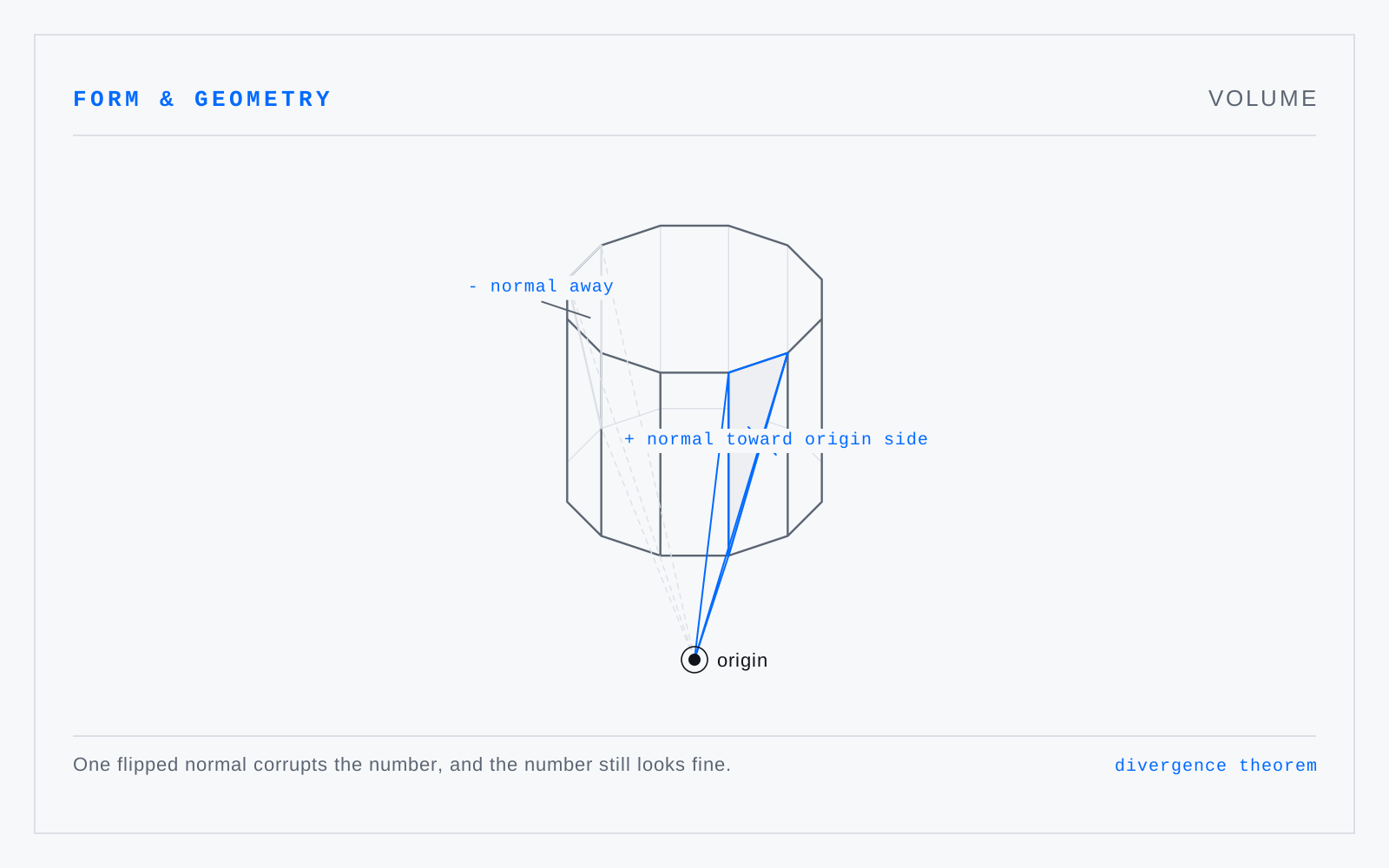
The measure of the space a closed surface encloses, computed from a mesh by the divergence theorem — summing the signed tetrahedra from the origin to each triangle. It requires a watertight, consistently oriented surface: an open or partly flipped mesh returns a number, and the number is meaningless. Also used loosely for the enclosed region itself.
In practice
In a design review 'volume' usually means the region — 'break up the volume' — not cubic millimetres. In print prep and costing it means the number, and a single flipped normal is enough to corrupt it.