Design Nomenclature / Systems & Spec
GD&T
Also called GD&T, geometric dimensioning and tolerancing, ASME Y14.5, GPS
A symbolic language — ASME Y14.5, or ISO's GPS standards — for tolerancing a part by function rather than by coordinate. Controls for form, orientation, location, profile, and runout are stated in feature control frames against declared datums, replacing chains of ±0.1 that over-constrain the part while under-specifying the intent.
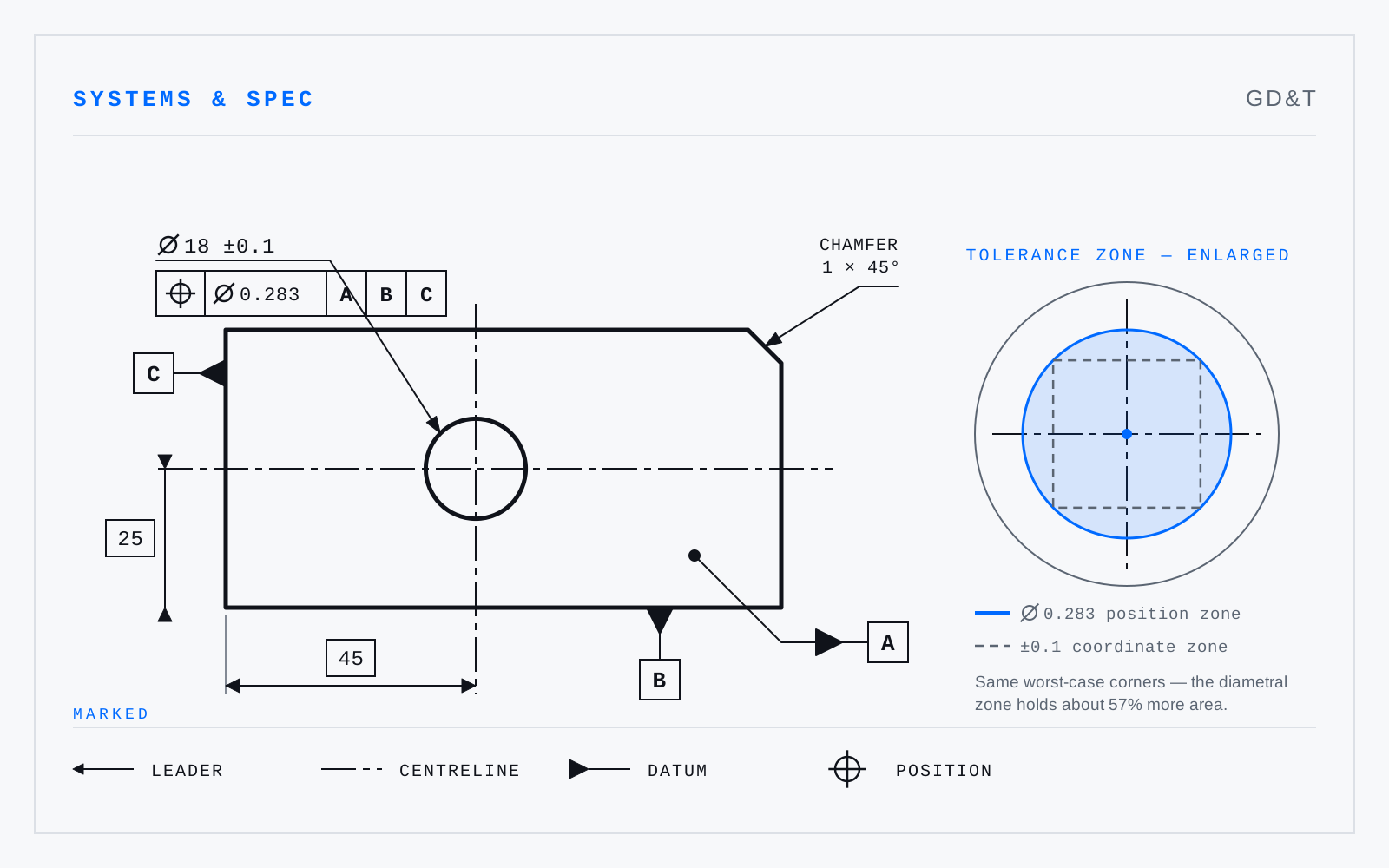
In practice
Adopted symbol by symbol, which defeats it. Position callouts on a drawing with no datum scheme are decoration; the datums are the part that does the work.
Not to be confused with
- ToleranceThe total permissible variation on a dimension — the distance between its upper and lower limits. Bilateral tolerance splits the band either side of the stated size (10 ±0.1); unilateral permits deviation one way only (10 +0.2 / −0). The band is what gets manufactured to; the stated size is a convenience.
- Basic dimensionIn GD&T, an exact theoretical value — boxed on the drawing — that locates or sizes a feature and carries no tolerance of its own. The tolerance lives in the feature control frame that refers to it, measured from the datums. ISO calls the same thing a theoretically exact dimension.