Design Nomenclature / Form & Geometry
Gimbal lock
Also called euler singularity, gimbal
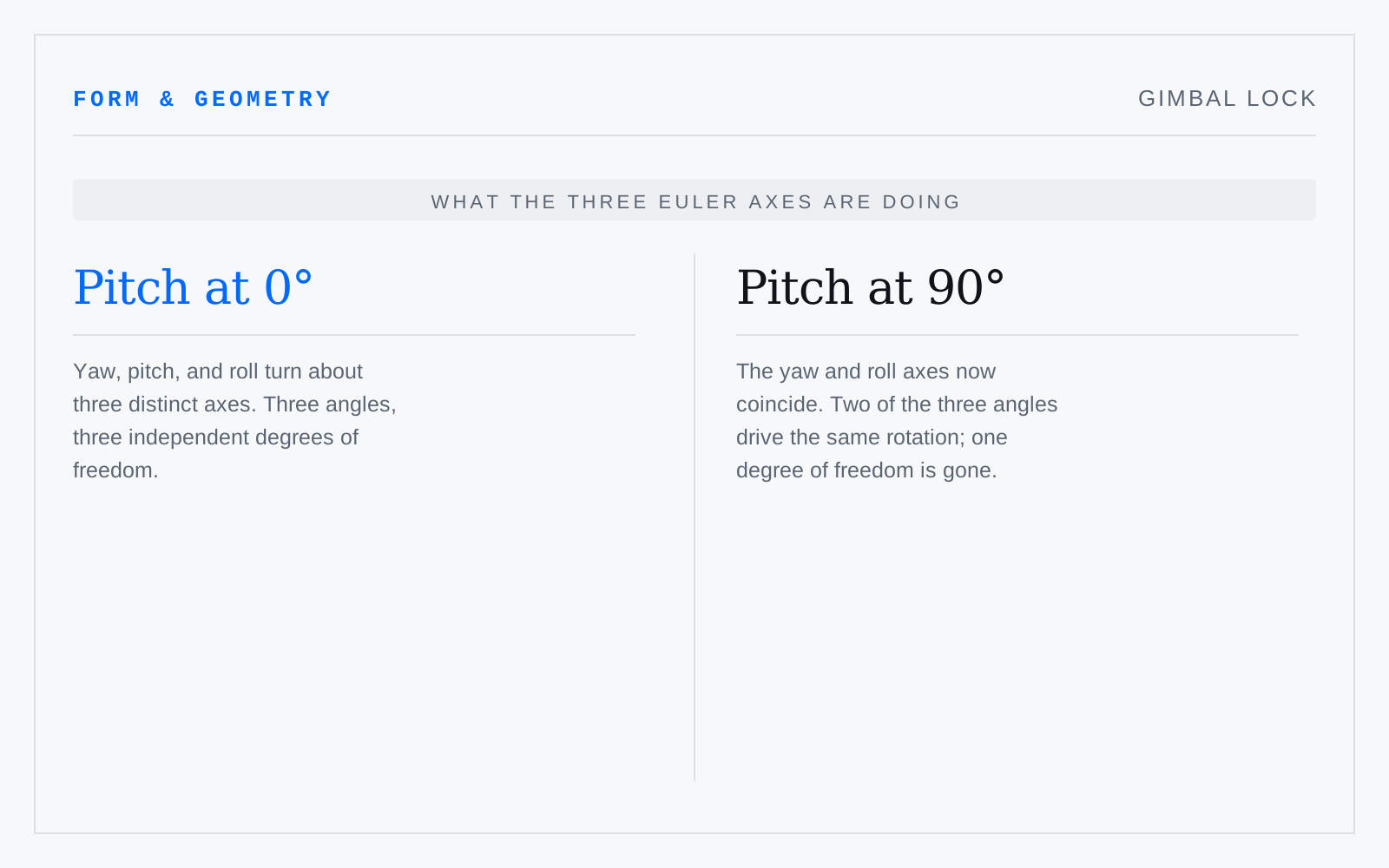
The loss of one rotational degree of freedom when two axes of a three-angle Euler rotation align: at 90° of pitch, yaw and roll turn about the same line and the pair collapses into one. It is a defect of the coordinates, not of the object — quaternions and rotation matrices have no such singularity, though any three-angle readout of them does.
In practice
Euler channels that suddenly demand a 180° flip mid-arc are the symptom. Fix it by reordering the rotation channels so the heavily animated axis is not the middle one, or by baking to quaternion and giving up readable curves.
Origin
From the physical gimbal — nested rings in a ship's compass or an inertial platform. Apollo's guidance platform had a real one with only three rings, and the crew genuinely had to fly around its locked orientation.