Design Nomenclature / Physical Model Making
Interference fit
Also called shrink fit, force fit, negative clearance, negative allowance, pressed fit
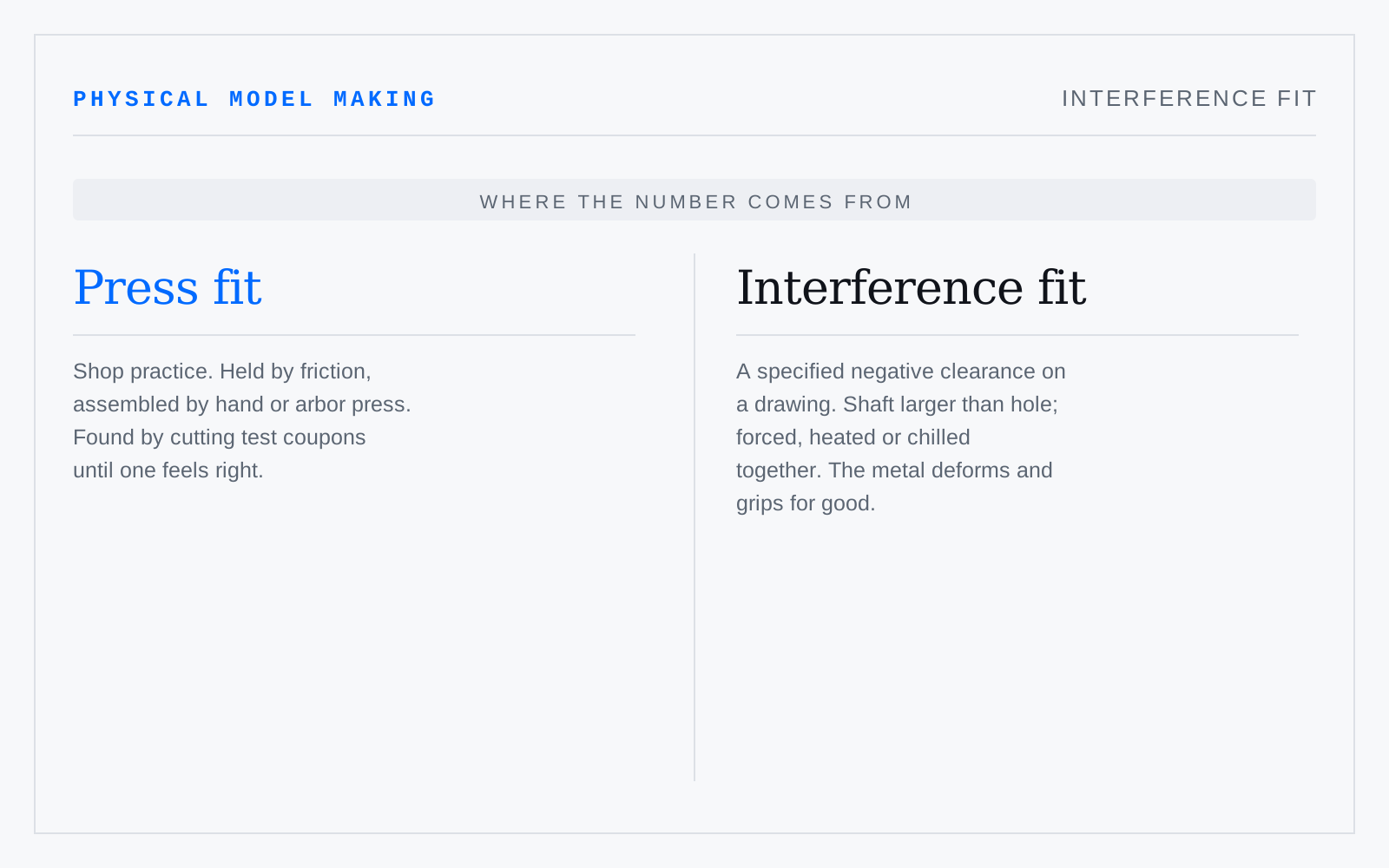
A specified fit where the shaft exceeds the hole across the whole of both tolerance ranges, so the two must be forced, heated or chilled together. The metal deforms elastically and grips permanently — this is how bearings are retained. It is a number on a drawing, not a feel, and a wrong number destroys both parts on assembly.
In practice
Everyone says press fit, which names a method rather than a fit. Specify the interference and let the shop decide whether to press, freeze, or heat.
Not to be confused with
- Press fitA joint held by friction alone between deliberately mismatched sizes, assembled by hand or arbor press. In a model shop it is how printed and laser-cut parts go together without hardware — and it is the first thing kerf, elephant's foot and layer swell quietly destroy. Cut a test coupon before committing the part.
- Clearance fitA fit in which the hole exceeds the shaft across the whole of both tolerance ranges, so the parts always assemble with a gap — guaranteed by the limits rather than by luck. The size of that gap is the design decision: a running fit needs room for lubricant and thermal growth, a location fit wants the least gap that still slides.
- Fit classA standardised pairing of hole and shaft tolerance zones — H7/g6, RC4 — producing a known relationship without designing limits from first principles. Three families: clearance, where a gap is guaranteed; interference, where overlap is guaranteed; and transition, where either may result depending on where the parts land in their bands.