Design Nomenclature / Physical Model Making
Lacquer
Also called nitrocellulose lacquer, shellac, evaporative finish
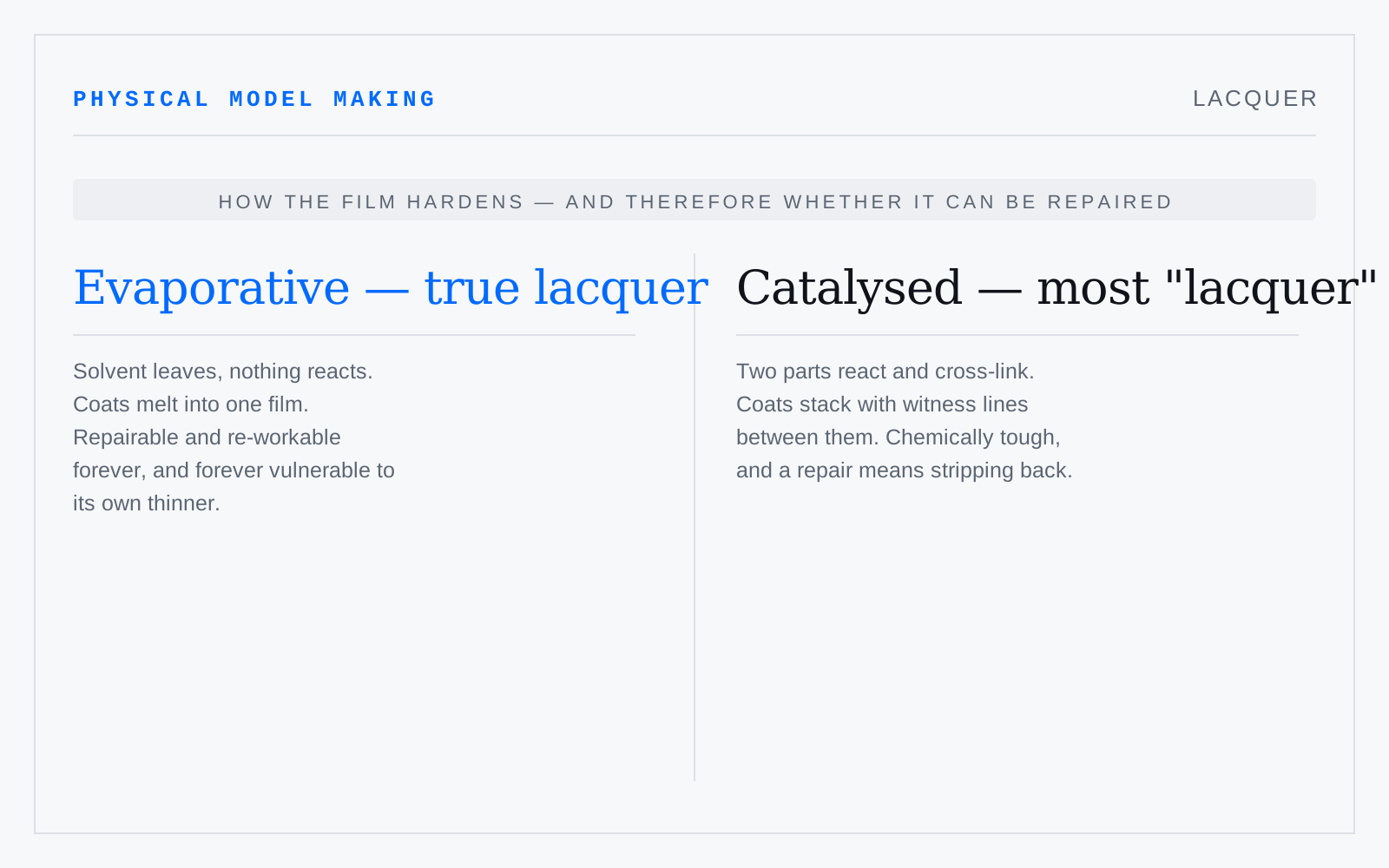
A finish that hardens by solvent evaporation alone, with no chemical cure. Each coat partly redissolves the one beneath, so the film builds as a single layer rather than a stack. It sands and polishes to a high gloss, repairs invisibly, and stays soluble in its own thinner for good.
In practice
The word is now a look rather than a chemistry: most "lacquer" sold is a catalysed two-part urethane, which cures, does not redissolve, and cannot be burned in or spot-repaired. Ask what is in the can before promising an invisible repair.
Not to be confused with
- Powder coatingElectrostatically spraying dry pigmented polymer onto a grounded part, then flowing it out in an oven. The film is thick — 60 to 100 microns — so it rounds every edge and softens every fine detail it crosses. Tough and cheap for enclosures, and exactly wrong for anything whose crispness was the point.
- ClearcoatA second specular lobe layered over the base material to stand in for a transparent coating — car paint, lacquered wood, wet plastic. It carries its own roughness and a fixed IOR near 1.5. Its thickness control only tints by absorption; the layer has no simulated depth and no parallax.