Design Nomenclature / Surface & Material
Polished finish
Also called polished, mirror finish, buffed, no. 8 finish
An abrasive progression taken until the remaining scratches are shorter than a wavelength of visible light, at which point the surface reflects near-specularly and returns a readable image of the room. It shows every later scratch and every underlying form error, which makes it the least forgiving finish to specify.
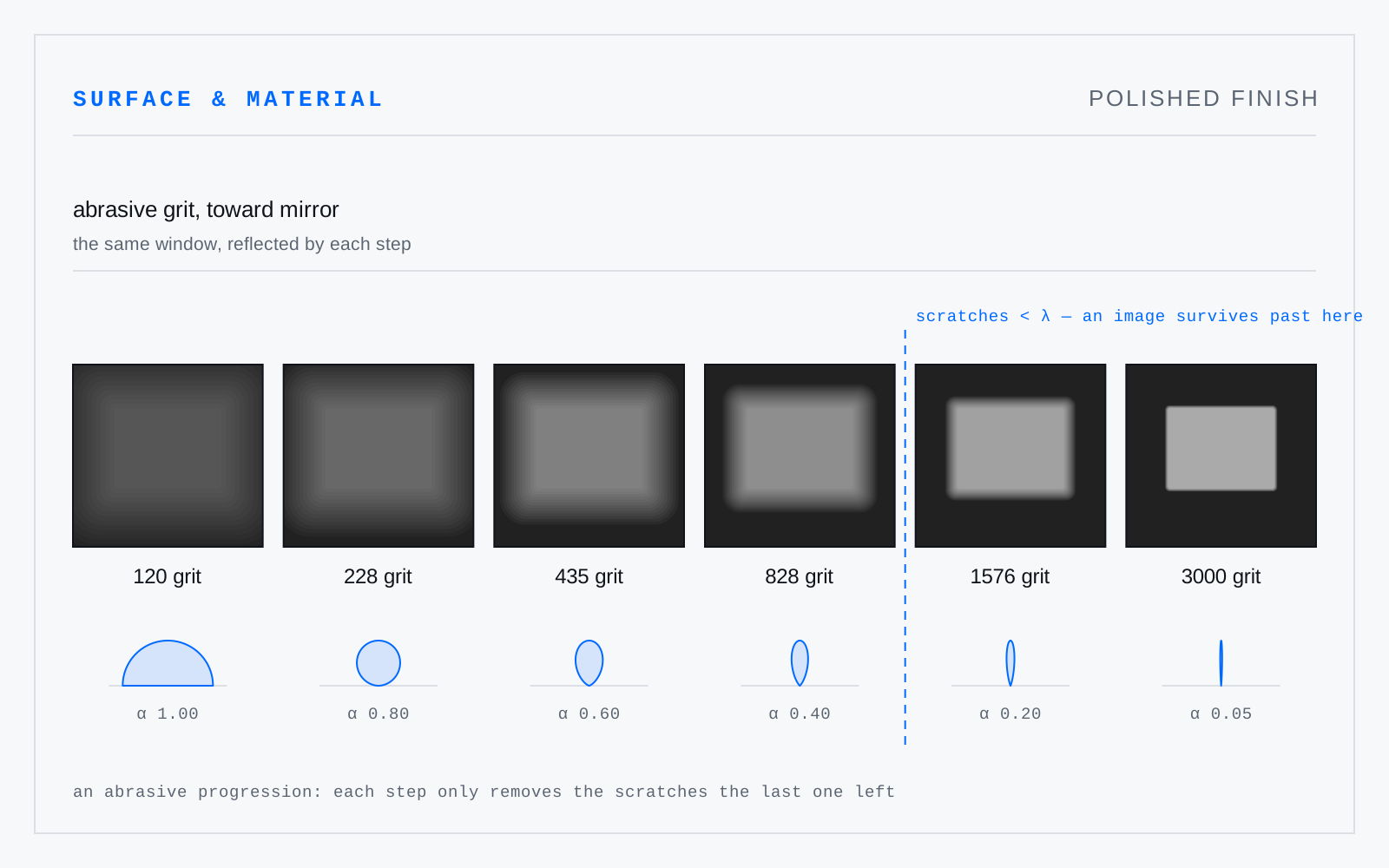
In practice
Costs more in the fixing than the polishing. A polished part reveals the deviation a matte finish would have hidden, so the tolerance tightens with it.
Not to be confused with
- Brushed finishThe look of a directional abrasive pass: parallel micro-grooves that stretch the highlight across the lay and make the surface change brightness as you rotate it. Graded by grit, hairline being the fine end. It buries the fingerprints and machining marks a polish would put on display.
- Bead-blasted finishThe uniform, non-directional matte produced by driving media against a surface at pressure, leaving randomly oriented micro-craters. Because the roughness has no lay, the highlight stays soft from every angle. Media size sets the grade; the process also cleans and slightly work-hardens what it hits.
- GlossThe degree to which a surface reflects specularly rather than diffusely — and, unusually for this vocabulary, an actually measured quantity: a gloss meter reads gloss units at a fixed angle, 60° by default, 20° for high gloss, 85° for near-matte. High gloss returns a legible image of the room.