Design Nomenclature / Surface & Material
Metalness
Also called metallic, metallicity, metalness map
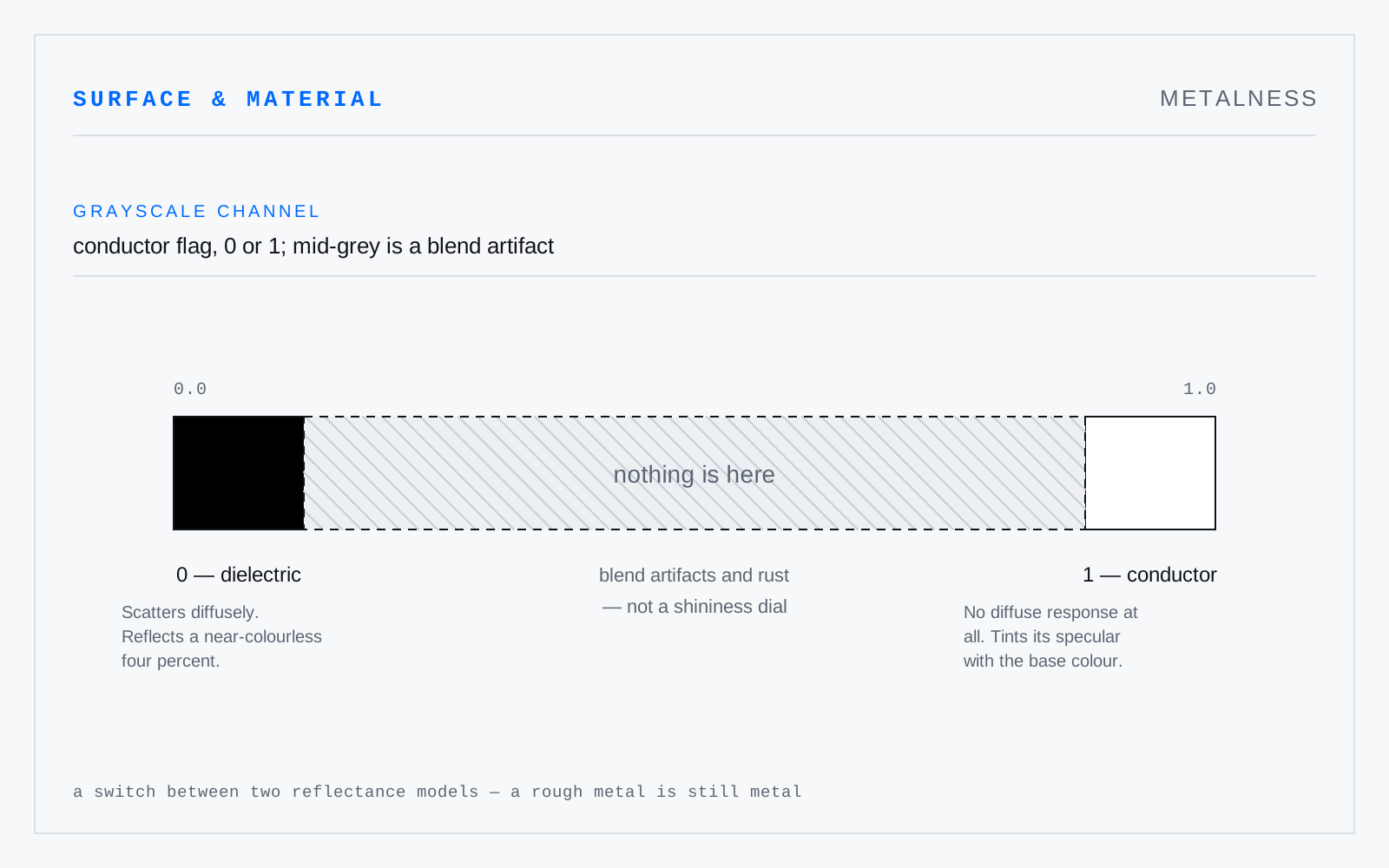
A switch selecting which reflectance model a surface obeys. Conductors have effectively no diffuse response and tint their specular reflection with the base color; dielectrics scatter diffusely and reflect a near-colorless four percent. Intermediate values describe nothing real — they exist to blend across texel boundaries and rust.
In practice
Not a shininess dial, though it is used as one. A rough metal is still metal; a glossy dielectric is still not metal.
Not to be confused with
- SpecularIn metal/rough conventions, a scalar remapping a dielectric's normal-incidence reflectance — default 0.5 meaning four percent, the top of the range around eight. In spec/gloss conventions, an RGB map giving that reflectance directly, which is also where conductors get their tint.
- GlossinessThe inverse parameterization of roughness: the same microfacet distribution addressed from the smooth end. High glossiness means a narrow lobe. Conversion is rarely a clean subtraction — pipelines apply their own remap curves or exponents, so a round trip through 1−x will shift the material.
- RoughnessThe statistical spread of microfacet normals across a surface, controlling how tightly reflected light clusters around the mirror direction. Low values concentrate energy into a small bright highlight; high values spread the same energy into a broad dim one. It is a distribution width, not a quantity of reflection.