Design Nomenclature / Color
NCS
Also called Natural Colour System, Natural Color System
The Swedish standard, built on Hering's opponent theory rather than on measurement: a color is described by how much it resembles the six elementary percepts — white, black, yellow, red, blue, green. S 1050-Y90R reads as 10% blackness, 50% chromaticness, a yellow leaning ninety percent of the way to red.
In practice
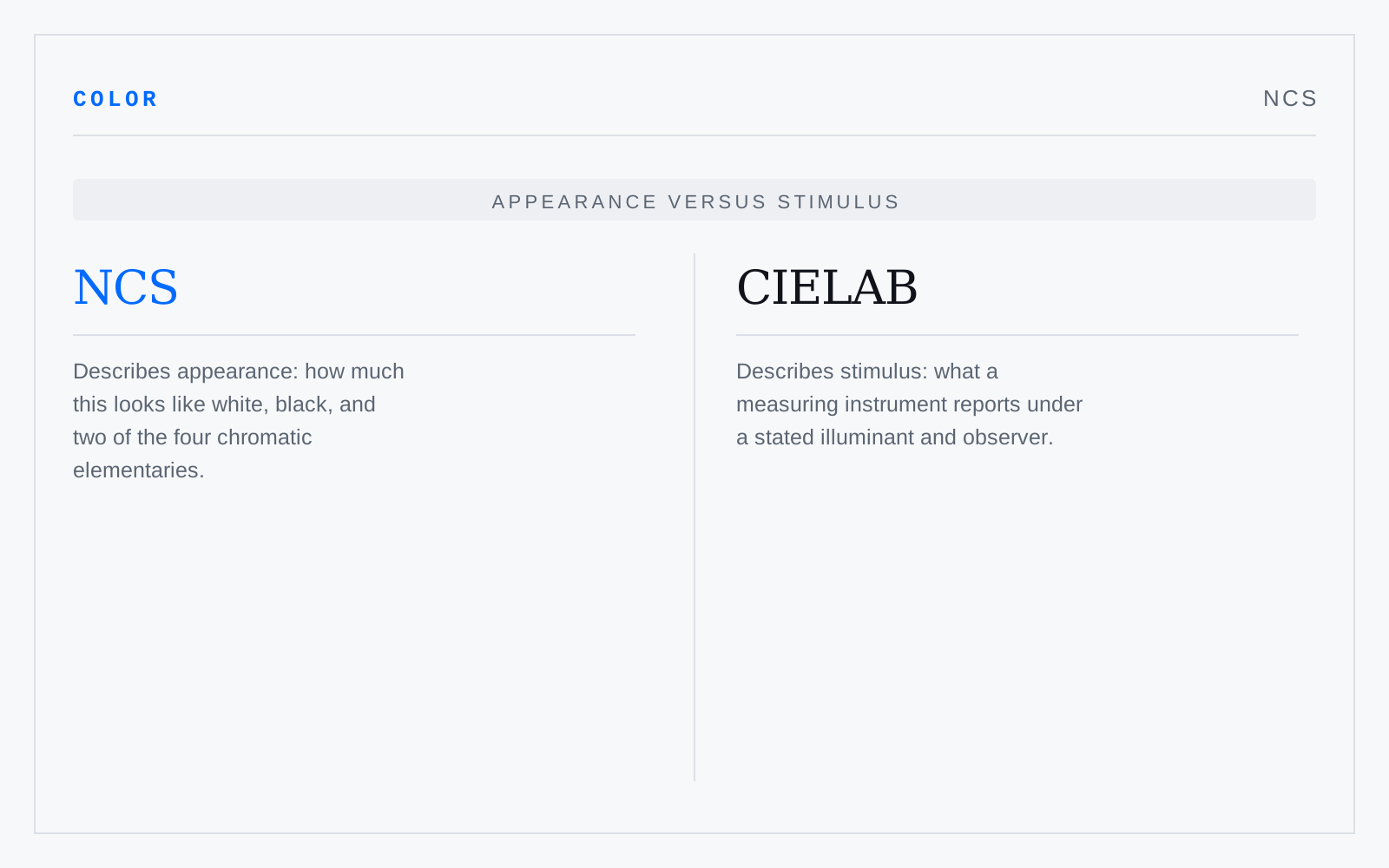
Dominant in Northern European architecture and paint specification. It describes appearance rather than stimulus, so a notation is not directly convertible without a measured sample.
Not to be confused with
- Munsell systemAlbert Munsell's 1905 ordering of color by hue, value, and chroma, notated as 5R 4/14. The achievement was perceptual spacing settled by eye and then by measurement: one step of value should look like one step anywhere in the solid, which is exactly why the solid comes out lumpy rather than a tidy sphere.
- CIELABA device-independent opponent space — L* for lightness, a* green to red, b* blue to yellow — built so equal numeric distances approximate equal perceived differences. Its polar form, LCh, restates a* and b* as chroma and hue angle. Both inherit a documented flaw: the blue region bends, so hue drifts along a ramp that should hold it.