Design Nomenclature / Color
OKLab
Also called Oklab
- Color
- Digital Model Making
- 2D & 3D
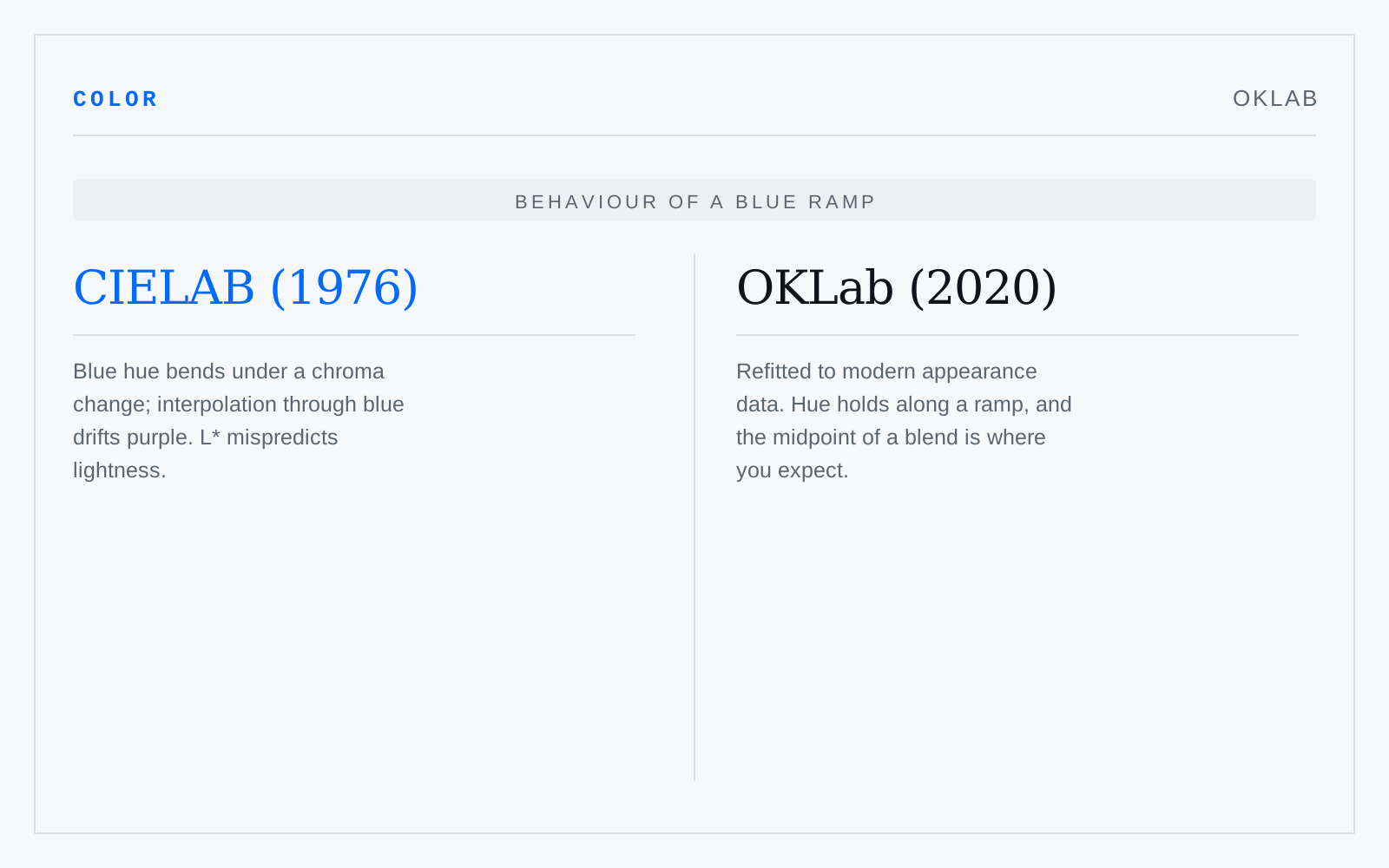
Björn Ottosson's 2020 revision of the Lab approach, fitted to modern appearance data. It corrects CIELAB's blue-hue skew and its weak lightness prediction, so interpolation between two colors stays on a plausible hue and passes through a plausible middle instead of drifting purple or sagging grey.
Not to be confused with
- CIELABA device-independent opponent space — L* for lightness, a* green to red, b* blue to yellow — built so equal numeric distances approximate equal perceived differences. Its polar form, LCh, restates a* and b* as chroma and hue angle. Both inherit a documented flaw: the blue region bends, so hue drifts along a ramp that should hold it.
- OKLChOKLab in cylindrical coordinates — lightness, chroma, hue angle. The arrangement designers actually want: hold L and sweep H and the swatches share an apparent lightness; hold H and drop C and the hue survives the fade. It is the first perceptual model to reach CSS with real browser support behind it.