Design Nomenclature / Digital Model Making
Parametric Modeling
Also called history-based modeling, feature-based modeling, the tree
A model recorded as an ordered sequence of operations bound to editable parameters and to references on earlier geometry. Change a dimension and the tree replays. The power and the fragility are one thing: a reference to a face that a later edit renames or deletes breaks the rebuild.
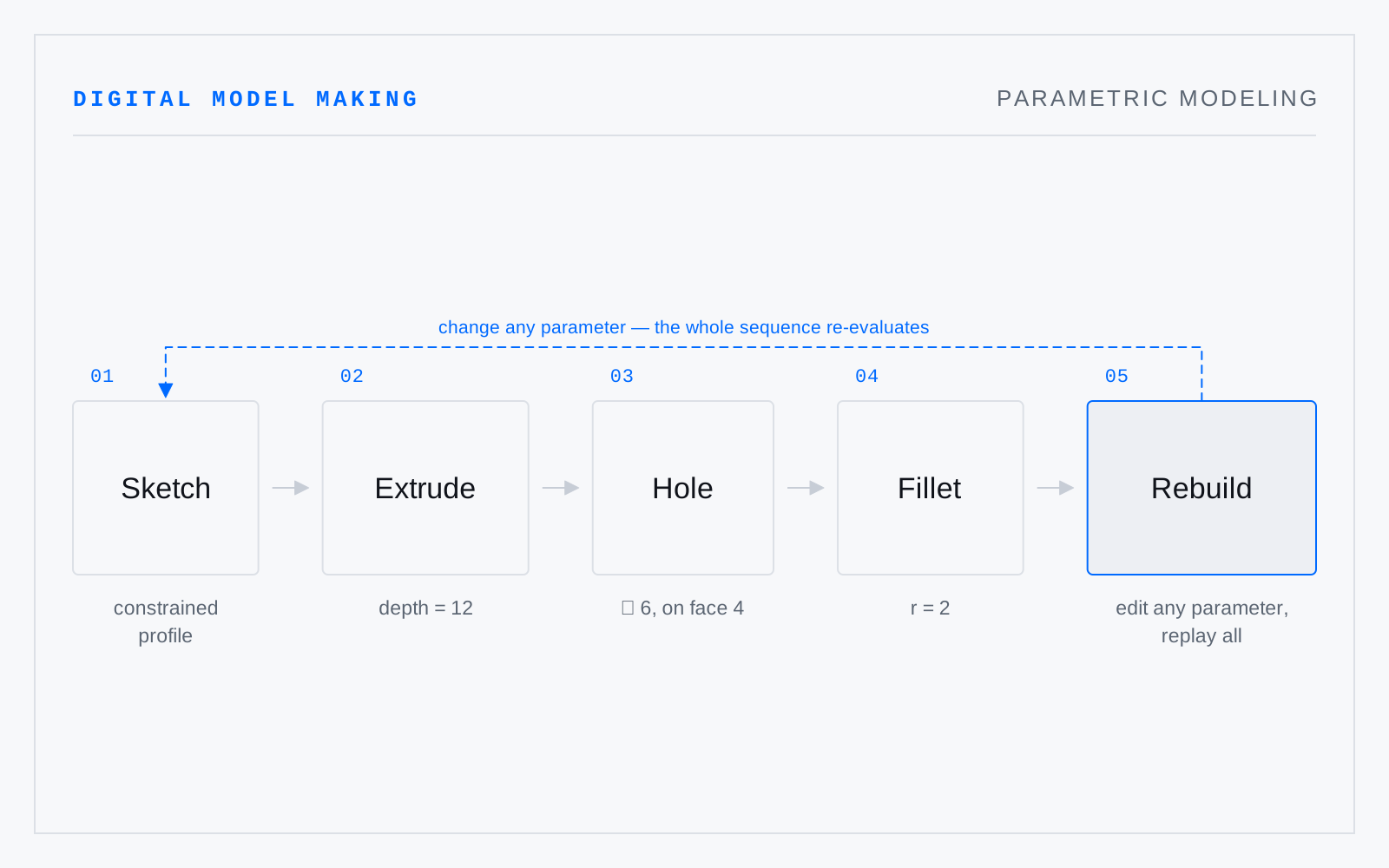
In practice
To a product designer it means history-based CAD. To a motion or environment artist it means a node graph. Neither notices the other means something else.
Not to be confused with
- Direct ModelingEditing the boundary geometry itself — grab a face, push it — with no feature tree to replay. Recognition tools infer intent, reading a ring of faces as a hole, so the edit stays sensible. Excellent on imported or dumb solids: there is nothing to break and nothing to parametrize.
- Procedural ModelingGenerating geometry from rules — a graph, a script, a grammar — rather than placing it. The output is a function of its inputs, so changing a seed or a count regenerates the whole model. Suits variation and repetition; poor for a one-off form, where writing the rule outlasts modeling the thing.
- Generative DesignAn optimizer proposes geometry against stated goals and constraints — loads, keep-outs, mass, manufacturing method — and returns candidates to choose among. In CAD practice this is topology optimization wrapped in a search over the setup, not a system that invents form. The designer's judgment moves upstream, into stating the problem.