Design Nomenclature / Surface & Material
Pearlescence
Also called pearl finish, nacre, mica finish, lustre pigment
The soft, layered glow of many thin platelets — mica, nacre, coated flakes — suspended at varied depths beneath a translucent surface, each catching light at a slightly different plane. The angular shift is broad and low in saturation, and the depth comes from the spread of the platelets, not from any single reflection.
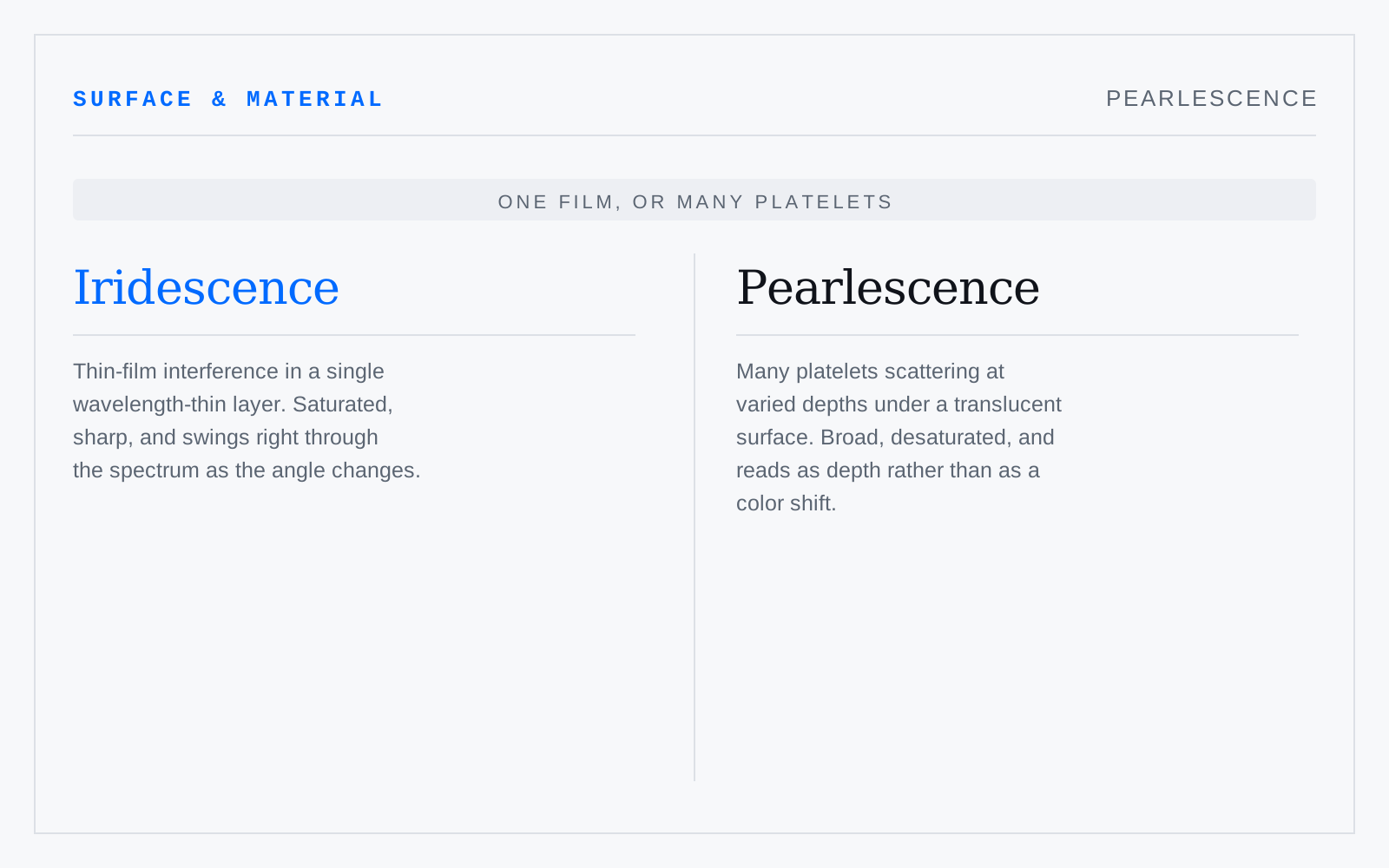
Not to be confused with
- IridescenceColor that shifts with viewing angle, produced by thin-film interference: light reflecting off the top and bottom faces of a film only a wavelength or so thick arrives out of phase and cancels selectively. Soap bubbles, oil on water, beetle elytra, anodized titanium. Structural — there is no pigment in it.
- LusterThe character of a surface's reflected light rather than its quantity. Mineralogy names the kinds — vitreous, metallic, waxy, resinous, greasy, silky, adamantine, dull — and they are not points on one scale. Two surfaces can meter identical gloss and read as entirely different materials, because luster folds in transparency, subsurface scattering, and structure.
- GlossThe degree to which a surface reflects specularly rather than diffusely — and, unusually for this vocabulary, an actually measured quantity: a gloss meter reads gloss units at a fixed angle, 60° by default, 20° for high gloss, 85° for near-matte. High gloss returns a legible image of the room.
Origin
From pearl, via nacre — the platelet structure inside a shell is literally the reference, not an analogy for it.