Design Nomenclature / Composition
Visual weight
Also called optical weight
- Composition
- Color
- Type
- 2D & 3D
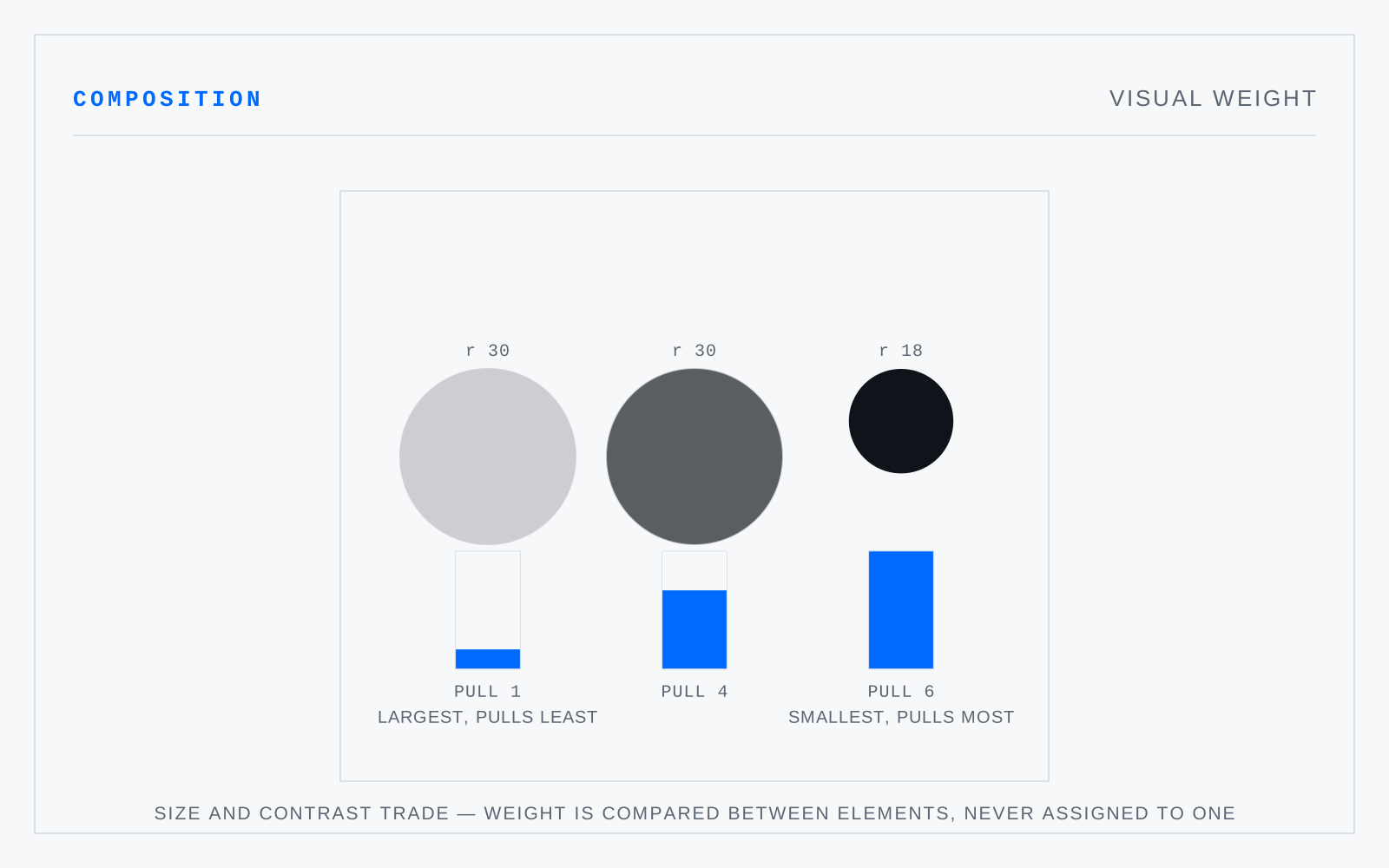
The apparent pull of an element — how much of the eye it takes. Size, value contrast against the ground, saturation, density, complexity, isolation, and distance from centre all feed it. No formula combines them, which is why weight is compared between elements rather than assigned to one.
In practice
Weight is relative and contextual. A rule is heavy on a white page and invisible on a grey one; 'heavier' only ever means heavier than the thing beside it.
Not to be confused with
- DominanceThe condition of one element carrying more weight than everything else in the field, so the composition has an unambiguous first. Dominance is a property of the whole and can be checked by comparison. Every field has one, or fails to, whether or not anyone chose it.
- BalanceThe distribution of visual weight about an axis or a centre so that no part of the field seems to fall. It is judged, not measured. Bilateral balance works across an axis, radial balance around a point, asymmetrical balance by trading a small dense element against a large quiet one.