The West Side Placer enters the written record in 1894, when a prospector named Adams found gold in the gravel terraces above the Little Snake River drainage. What happened next was extraordinary for such a remote corner of Colorado: within a year, investors from Providence, Rhode Island had organized a mining association, staked a block of placer claims, and committed to one of the boldest infrastructure gambles in the district's history.
The 36-Mile Canal
Placer gold is worthless without water, and the terraces sit high and dry above the river. The 1895 solution was brute force: a canal, ultimately surveyed at roughly thirty-six miles, cut across the high sage to bring water from the Little Snake down to the gravel banks. Contemporary accounts describe hundreds of men, horse teams, and hydraulic giants — eight-inch nozzles driving water against the terrace faces, washing gravel through mercury-charged sluices.
The engineering was real. The May 1897 Engineering and Mining Journal reported the association's plant washing thousands of cubic yards per day at the height of the season. The names attached to the work were serious people: consulting engineers, canal contractors who had built across two states, and technical examiners whose reports survive in the project archive.
Why It Failed
The operation collapsed within a few seasons, and the reasons recorded at the time have shaped every attempt since. The water supply proved inconsistent — a canal fed by a snowmelt river runs generously in June and starves in August. And the recovery chemistry betrayed them: the mercury used to capture fine gold became contaminated (period accounts blame arsenic and antimony minerals in the black sands), "sickening" the amalgam until it stopped collecting gold at all.
There is a deep irony in that detail. The minerals that poisoned the 1890s recovery were riding in the same heavy black sands that carry the monazite — the rare-earth mineral that makes the deposit strategically interesting today. The nineteenth century's contamination problem was the twenty-first century's resource, sitting unrecognized in the sluice boxes.
What Survives on the Ground
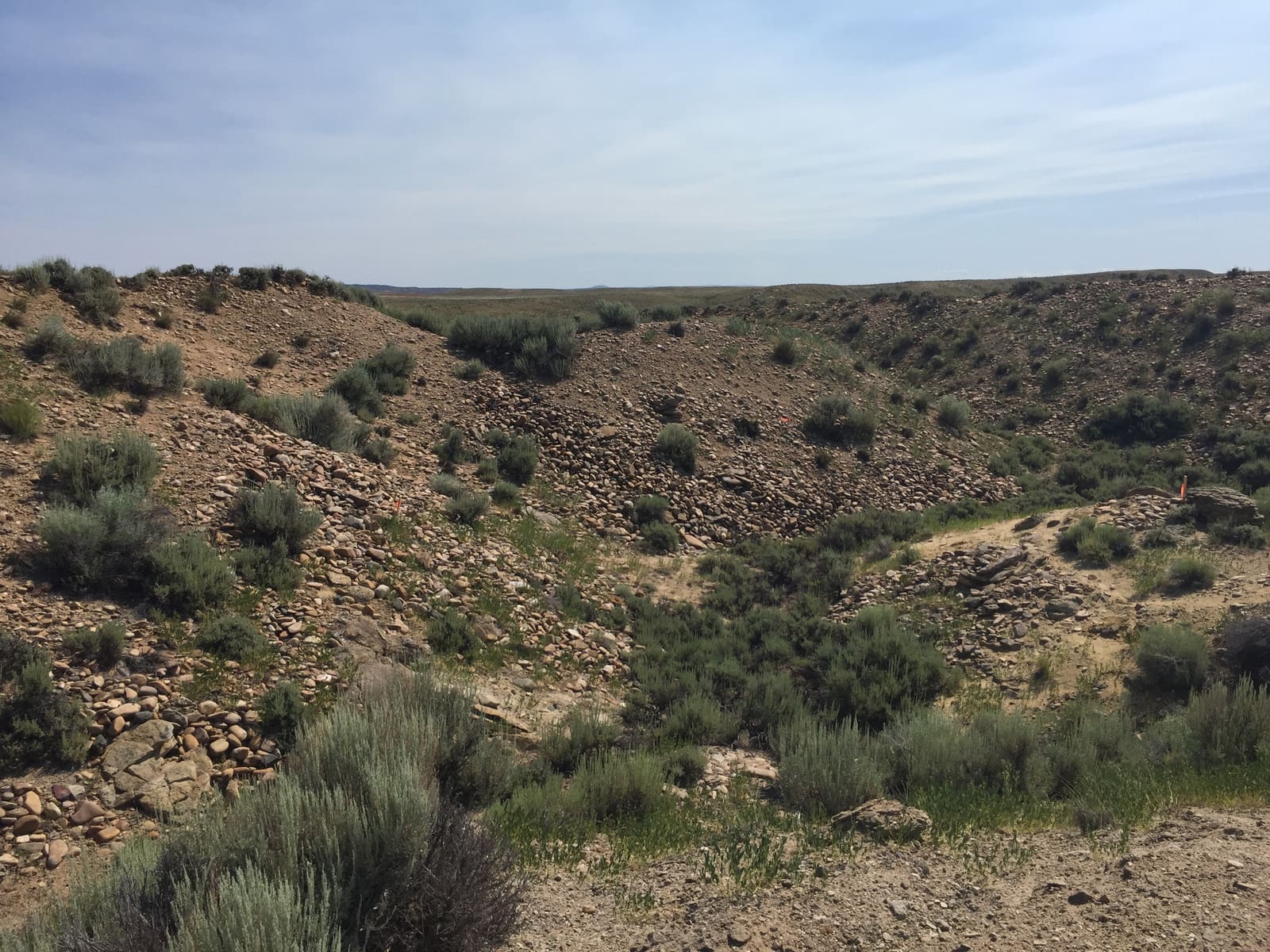
Walking the property today you can still find the physical record: hand-stacked cobble rows where miners moved gravel one stone at a time, cut faces in the terrace edges, claim corners set in the 1890s — some preserved for more than a century in the dry air — and segments of the canal alignment traceable across the sage. The project's archive holds the paper record to match: association documents, journal accounts, and engineering reports that make this one of the better-documented placer failures of its era.
The field taught its first lesson early: the gold is real, the water is hard, and the black sand is trying to tell you something.