Design Nomenclature / Color
Additive color
Also called additive mixing, light mixing
- Color
- Light & Optics
- 2D & 3D
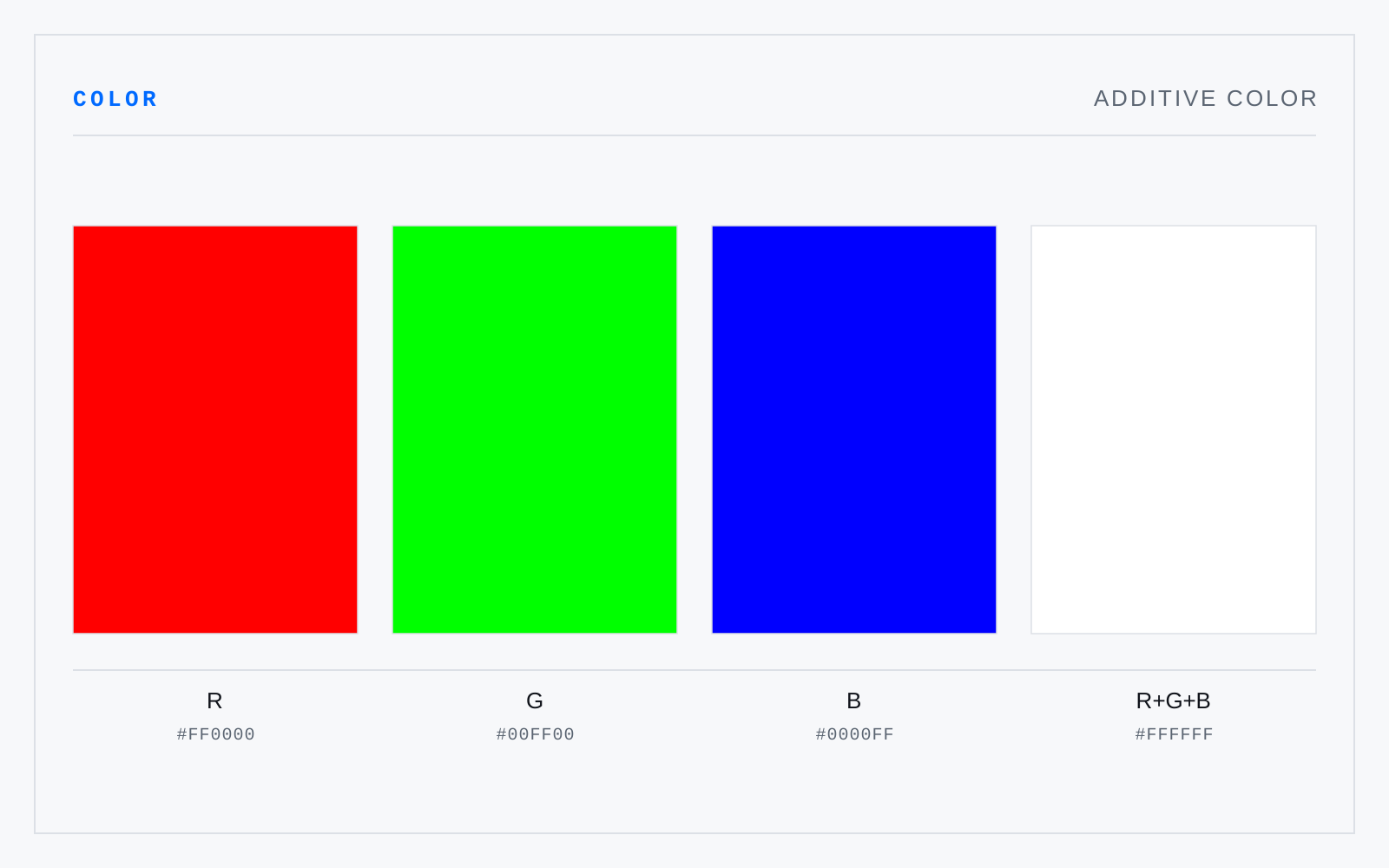
Mixing by summing emitted light: red, green, and blue primaries combine toward white, and every addition raises luminance. Screens, stage lighting, and projection work this way. The primaries were chosen to address the eye's three cone types — there is nothing special about those wavelengths in the physics.
Not to be confused with
- Subtractive colorMixing by removing wavelengths from a light source: each colorant absorbs part of the spectrum, so every addition darkens. Cyan, magenta, and yellow are the ideal primaries — each subtracts exactly one additive primary — and the red-yellow-blue set taught in schools is a historical approximation that demonstrably mixes worse.
- Partitive mixingMixing that happens in the eye rather than in the medium: marks too small to resolve individually average into one percept, weighted by the area each occupies. Neither additive nor subtractive — no light is summed and no colorant is combined. Halftone, pointillism, weaving, and every RGB subpixel depend on it.
- ComplementaryA pair of hues opposite one another on a color wheel — but which pair depends entirely on the wheel. In RYB, blue opposes orange; in additive light, blue opposes yellow; in an opponent space, opposition is the negation of both axes. The schoolroom red-green pairing is a pigment convention, not a fact about light.