Design Nomenclature / Type

H&J

Also called hyphenation and justification, H&Js

The rule set governing how lines break and fill: minimum, optimum and maximum word spacing, permitted letter spacing and glyph scaling, how many consecutive hyphens are allowed, minimum characters before and after a break, and the hyphenation zone — the strip at the line's end within which a hyphenated break is permitted.
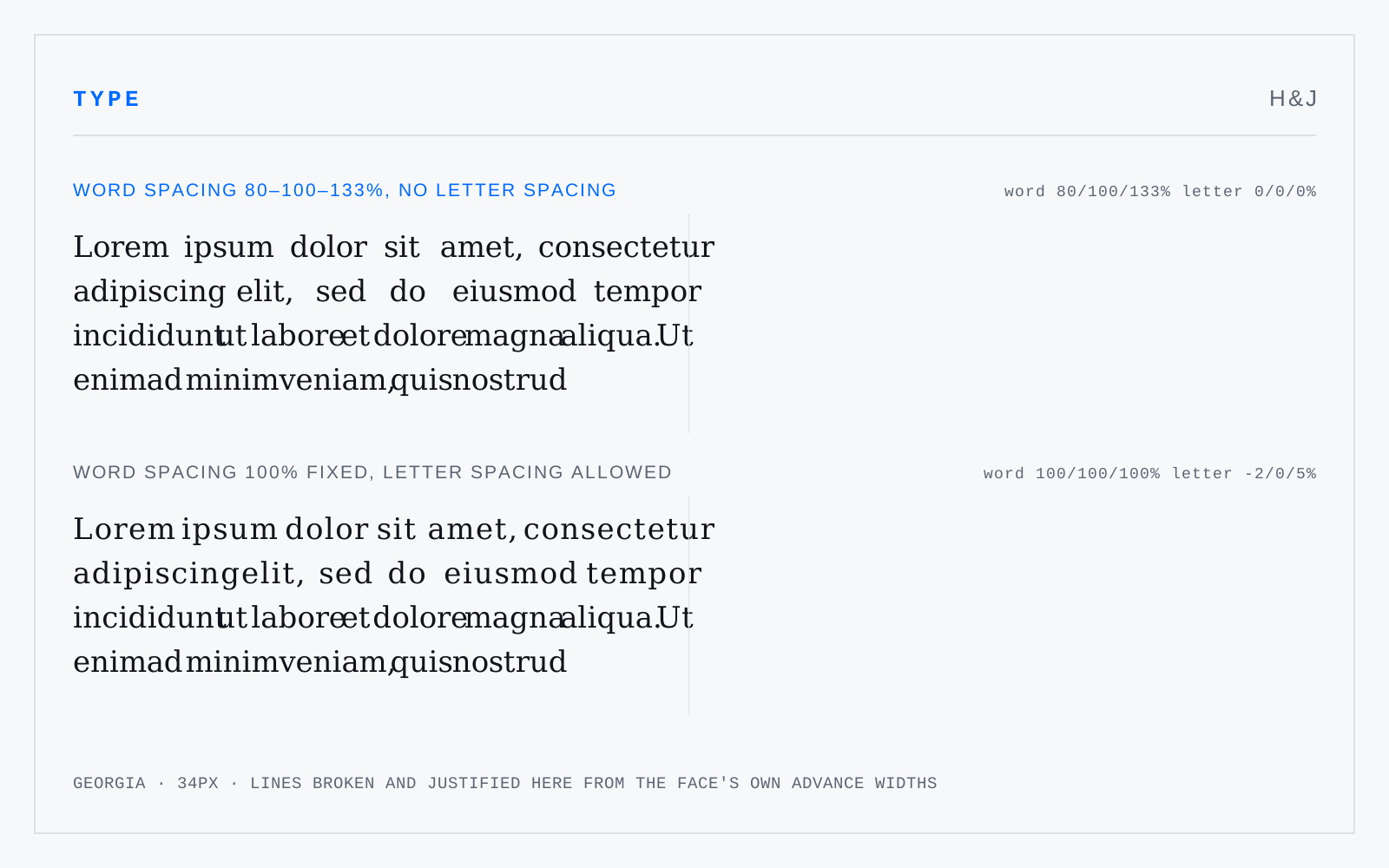
Two justified paragraphs at a 34-character measure, each with its H&J tolerances printed above it. The first is allowed word spacing from 80 to 133% and no letter spacing: the fill lands entirely in the word spaces, which yawn on the lines that need most and sit close on the lines that need least, while the letters stay at the face's own fitting. The second fixes word spacing at 100% and permits letter spacing to +5%: its word spaces stay near natural and the letters are spread instead, loosening the colour of the lines that need most. Where 5% cannot fill a line, the remainder goes back to the word spaces — so the second block's spaces are not perfectly even either. Both leave the last line unjustified.

In practice

A page-layout concept the web has only partially caught up with. CSS now offers hyphens, hyphenate-limit-chars and hyphenate-limit-zone; the word-spacing tolerances that make justification bearable in InDesign have no CSS equivalent at all.

Not to be confused with

How this term connects

JustificationMeasureRagRiverWord spacingH&J
Related Confused with