Design Nomenclature / Light & Optics
Veiling glare
Also called veiling luminance, flare light, lens veiling
- Light & Optics
- Systems & Spec
- 2D & 3D
Stray light scattered inside a lens or an eye that lands more or less uniformly across the image, adding a luminance floor everywhere. It does not blur the picture; it lifts the blacks, which crushes shadow contrast while leaving the highlights essentially untouched.
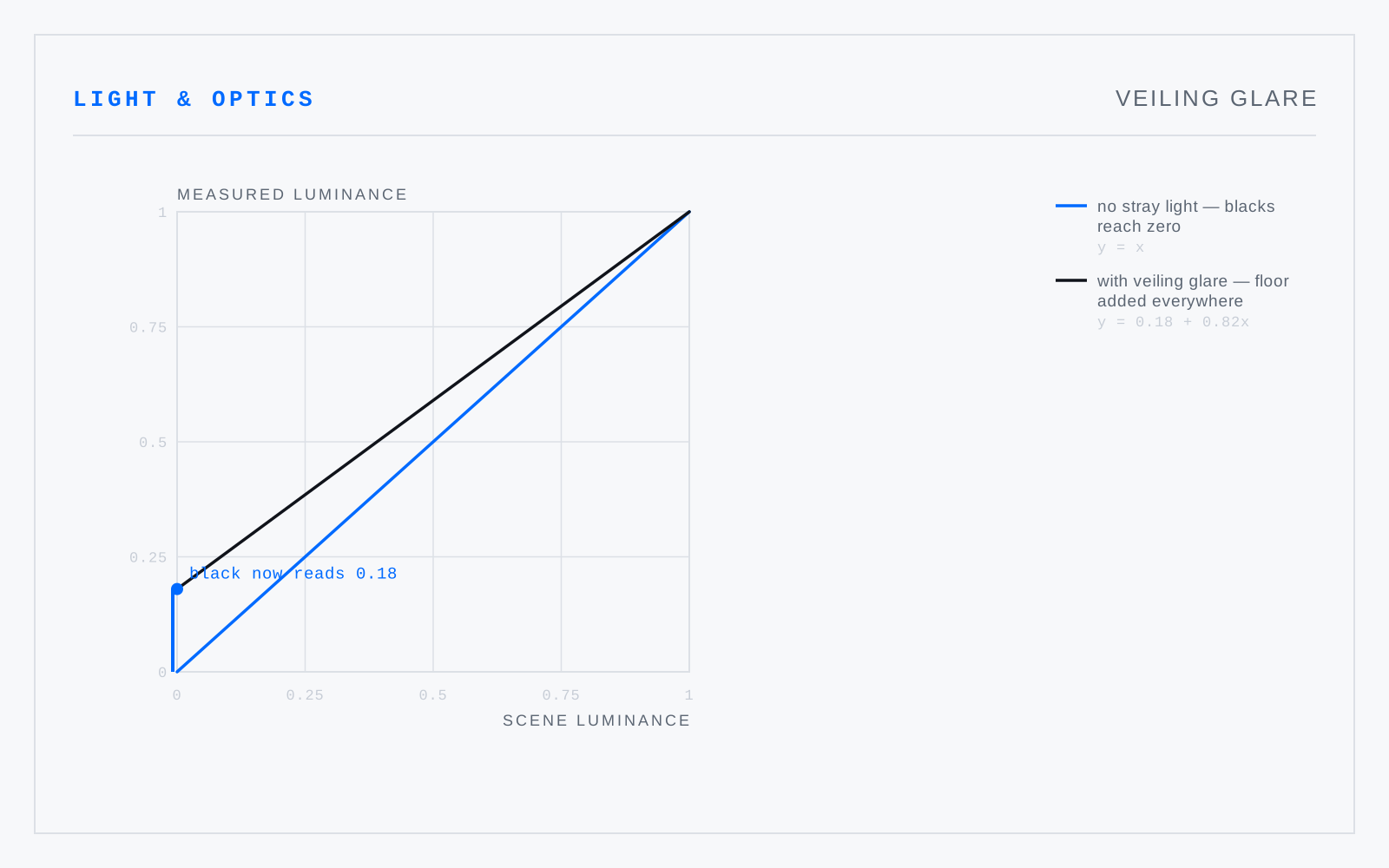
In practice
The mechanism behind a washed-out screen in daylight, and behind why a dark-mode page in a bright room loses its shadow detail long before its highlights suffer.
Not to be confused with
- GlareVisual impairment or discomfort caused by a luminance in the field of view far above what the eye is adapted to. Disability glare measurably reduces what can be resolved; discomfort glare merely hurts. Both depend on the ratio to the adaptation level, not on absolute brightness.
- BloomA post-process that bleeds luminance outward from the brightest parts of an image, standing in for scattering in the lens, the sensor's cover glass, or the eye's own media. It is applied to the finished image rather than simulated in the light transport itself.
- Lens flareArtifacts from light reflecting between the elements of a lens instead of passing through — ghosts of the aperture marching across the frame opposite a bright source, plus streaks thrown by the iris blades and any anamorphic geometry. Coatings suppress it; a strong enough source overwhelms them.
- Dynamic rangeThe ratio between the largest and smallest luminance a scene, sensor, or display can carry, usually quoted in stops of doubling. A real scene may span twenty; a good sensor fourteen; an SDR display under ten. Everything difficult about photography lives in that gap.