The most demanding design client I've ever had is a sensor the size of a candy bar. A fluxgate magnetometer measures the Earth's magnetic field down to fractions of a nanotesla — fine enough to see buried magnetite from the air, which is the point: it flies on a drone, mapping mineral ground. And it makes one non-negotiable demand of everything designed around it: be magnetically invisible.
The Constraint Rules Everything
Hang a sensor that sensitive on an aircraft and the aircraft itself becomes the noise. Motors, battery leads, a steel screw — each writes its own signature over the geology you're trying to read. The vendor's advice is to move the sensor meters away from the airframe. Physics' advice is stricter, and it cascaded through every part I designed:
- Materials first. The entire mounting system — clamps, trays, saddles, the towed-pod shells — is PETG plastic, carbon tube, aluminum, brass, and nylon. No steel, no zinc-plated anything, no magnets. One revision in the design log exists solely to change brass bolts to nylon, because near a fluxgate even brass was a compromise.
- Geometry second. The sensors ride paired, as a gradiometer, so the drone's own magnetic signature — identical at both sensors — subtracts out of the measurement. The parts hold that pairing rigid: flex between the sensors turns into false geology.
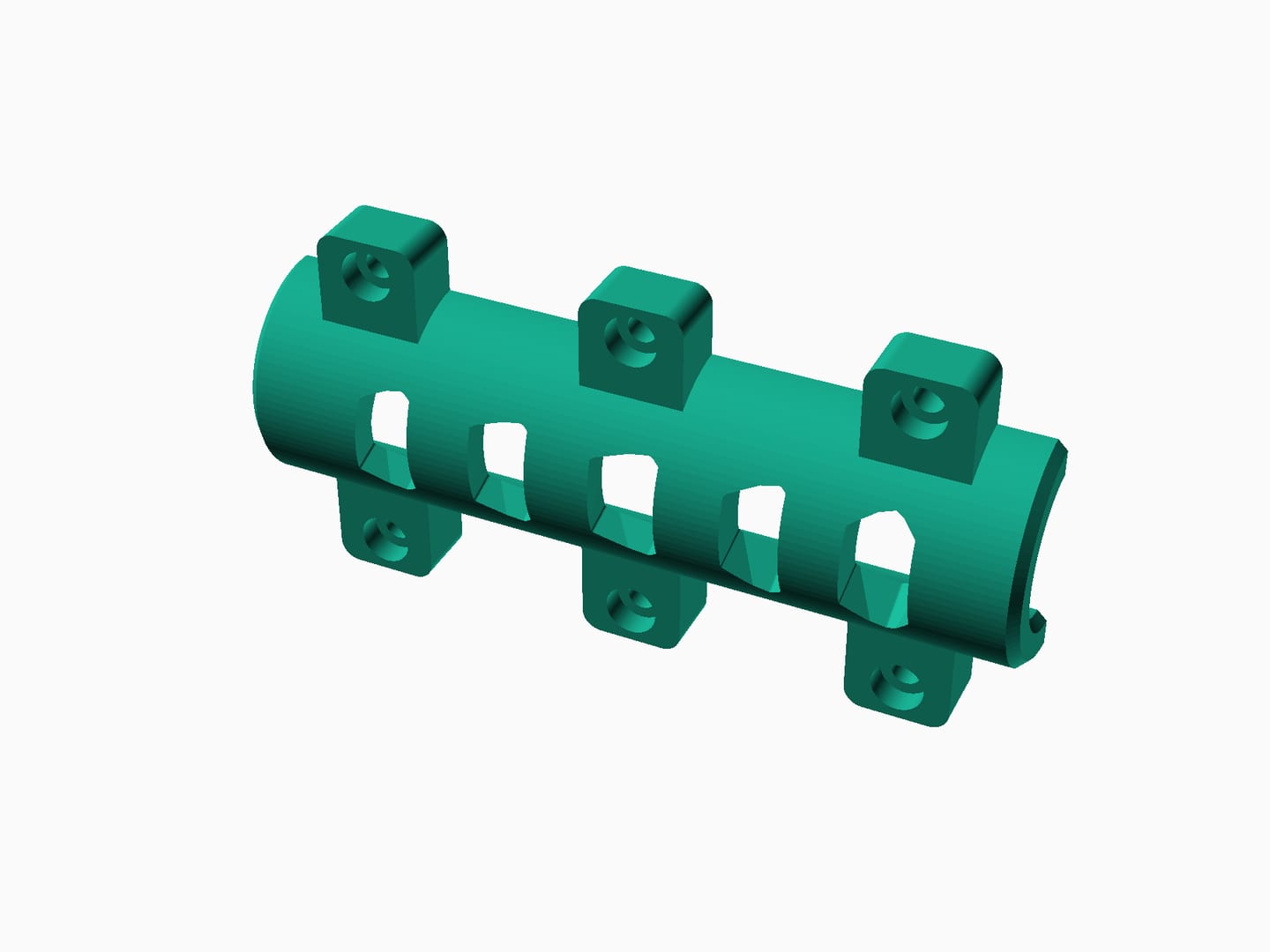
- Mass third. Every gram of mount is flight time not spent surveying. Which is where the design language came from: parts lightened with generative Voronoi lattices and organic cutouts — structure only where load paths need it, air everywhere else.
The Process Was Editorial
The workflow will look familiar to anyone who has produced serious print work: source documents first (the sensor manual, the airframe drawings, the vendor's mounting notes), then a design memo stating dimensions and constraints, then the parametric model, then a manufacturability review before anything was committed to material. Specification → draft → edit → proof. I have run that exact sequence on books.
That is the honest thesis of this essay: constraint-first design is one discipline, whatever the medium. Typography taught it to me first — the reader's eye is also an invisible client with non-negotiable physics, and every font choice either serves it or doesn't. The magnetometer just made the stakes measurable. Set a line of type wrong and readers tire; set a screw wrong and the survey data is garbage at two hundred readings per second.
What Good Constraints Buy You
Designers complain about constraints and then quietly rely on them, because a hard constraint is a decision someone else already made — a gift of reduced possibility space. No ferrous metal within arm's reach of the sensor eliminated ninety percent of hardware-store solutions and forced the parts to become genuinely designed objects: printed geometries that clamp carbon tube with nylon bolts and hold a laboratory instrument steady under rotor wash.
The parts that came out of this process don't look like drone accessories. They look intentional — chamfered, latticed, honest about their material. That isn't styling. Nothing in this system is styled. It's what design looks like when a constraint you cannot see is allowed to make every decision it has a right to make.