The West Side Placer is not a vein deposit or a buried channel. It is a landscape — a system of ancient river terraces spread across the district, each one a bench of gravel abandoned as rivers cut downward through the last several million years.
How the Terraces Formed
The story, assembled in the project's geological reports and the federal grant's technical narrative, runs like this. To the south and east stand uplifts of Archean and Paleoproterozoic granitic and metamorphic rock — among the oldest basement in Colorado, raised during the Laramide mountain-building. Those rocks carry accessory minerals that are individually microscopic but collectively enormous: monazite, xenotime, zircon, ilmenite, garnet, and gold.
Erosion has been dismantling those highlands ever since, and every flood sorted the debris by density. The light quartz and feldspar washed on; the heavy minerals — five times denser than sand in the case of monazite, nineteen times in the case of gold — lagged, settled, and concentrated wherever the water slowed. Regional drainage shifts, including volcanic episodes that repeatedly re-routed the ancestral rivers, spread these concentrations across successive terrace levels rather than down a single channel. The result is the geometry the old examiners kept describing: modest grades, astonishing extent.
The Working Blanket
For an operator, the deposit's virtues are physical before they are chemical:
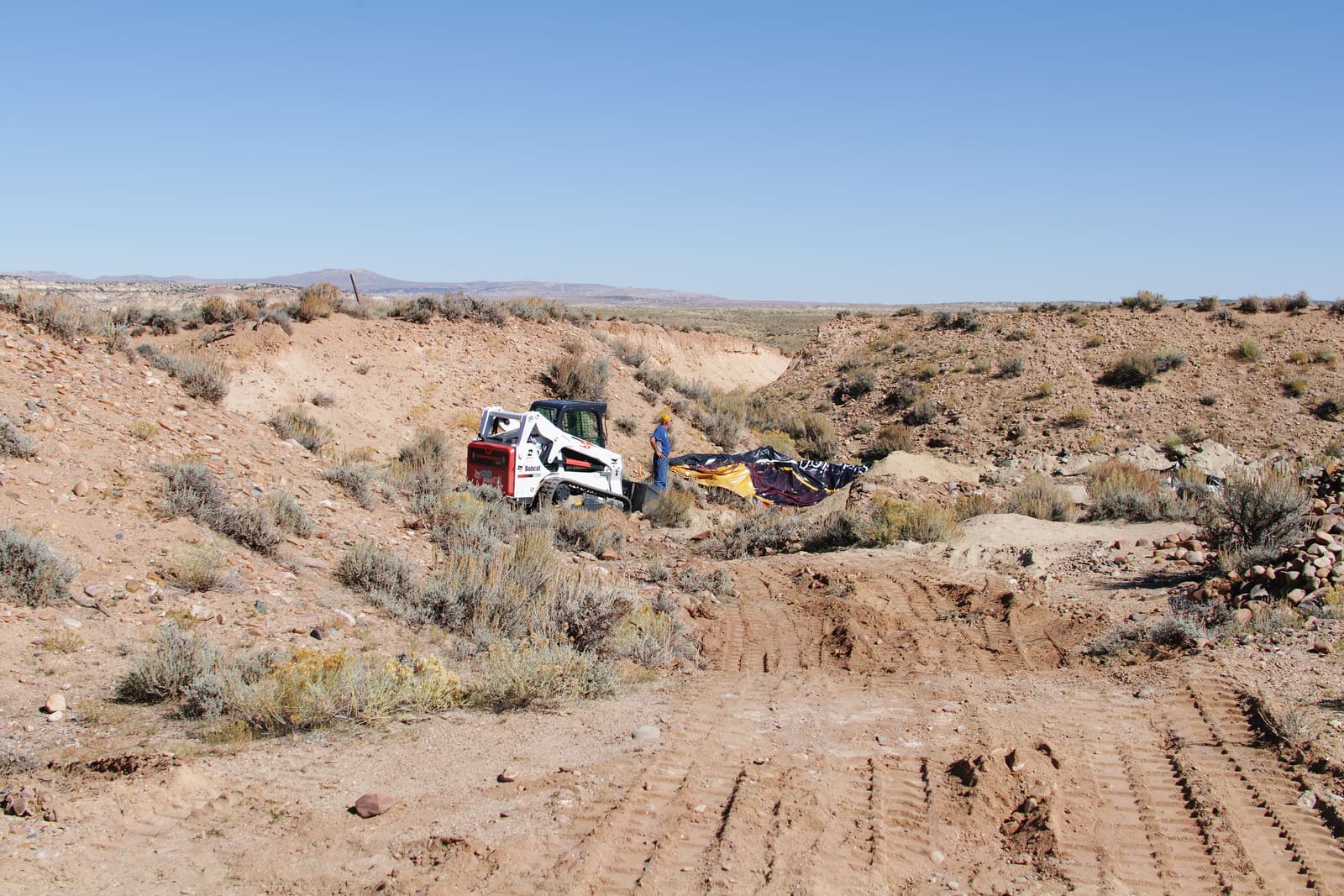
- Shallow. The gravel blanket runs roughly ten to twelve feet thick over most of the ground, locally to about forty. There is no shaft, no blasting, no stripping ratio to fight — the resource starts at the grass roots.
- Soft. Unconsolidated sand and gravel, diggable with conventional excavators.
- Self-sorting. The same density contrast that formed the deposit is the recovery method. Gravity built it; gravity mines it.
The Heavy-Mineral Fraction
Across the sampling programs, the heavy-mineral-sand content of the gravels has ranged from under one percent to several percent by weight, varying by terrace and by lens — figures established by float-sink analysis at Hazen Research and corroborated by other laboratories, with richer streaks where paleochannels concentrated the sands. Within that heavy fraction rides the economic suite: monazite and xenotime carrying the rare earths, ilmenite and rutile carrying titanium, zircon, garnet, columbite-tantalite — and the gold that started it all.
One more geological gift: the bedrock beneath the gravels is itself a sedimentary conglomerate in places, and historic drilling found gold-bearing material below the obvious gravel contact. The deposit does not necessarily stop where the digging gets easy — a question the modern program's drilling was designed to answer.