Nothing in mineral exploration is real until it is permitted. Behind the geology chapters sits a quieter archive — the regulatory record that lets a small operator put machines on public-trust land and obliges it to leave the ground whole.
The Regulatory Stack
The West Side Placer operates across a mosaic of land status, each layer with its own authority and paper trail:
- Colorado State Land Board — the mineral lease anchoring the core ground since 2016, with its extensions and annual obligations. State trust land earns revenue for Colorado schools; a lessee is, functionally, working for the schoolchildren of Colorado.
- Colorado Division of Reclamation, Mining and Safety (DRMS) — the operating permits, in escalating scale: a prospecting permit for the early sampling, limited-impact 110-series permits for bulk sampling on small acreage, and a 112 hardrock permit governing larger operations — each carrying a posted reclamation bond sized to the actual disturbance.
- Bureau of Land Management — unpatented mining claims on the federal ground, with their annual maintenance and filing rhythm.
- Colorado Division of Water Resources — well permits and the water accounting that dry-country operations live and die by.
Operating Light on a Working Landscape
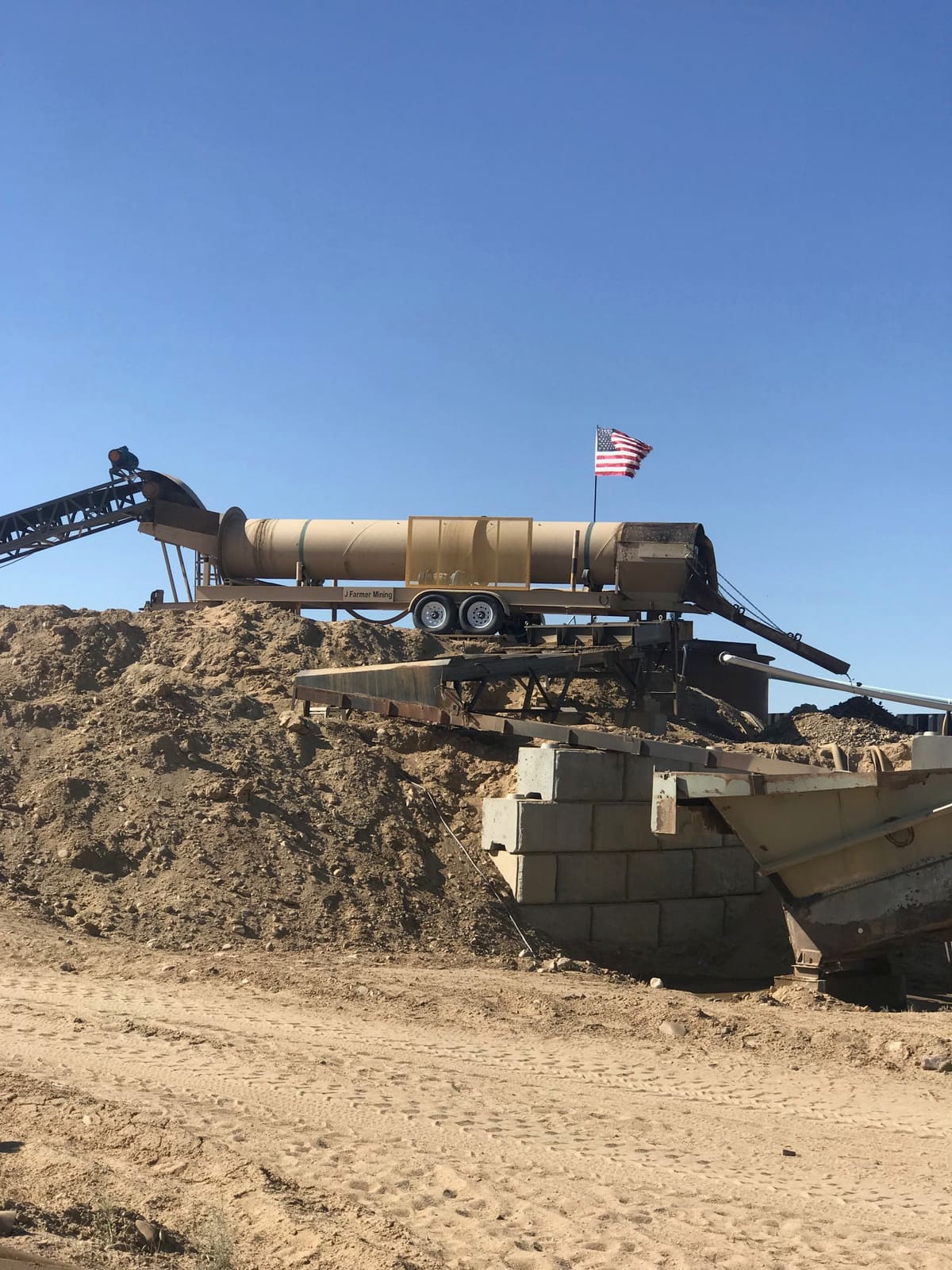
The photographs in this section show the operating philosophy as much as the equipment. This is working rangeland — wild horses graze through the claims, and the sage between the historic workings has been recovering since the 1890s. The modern program was built to fit that:
- Small disturbance footprints, opened in sequence and reclaimed behind the operation rather than left for a final campaign.
- No process chemicals in the field. The recovery circuit is entirely gravity and water; the only chemistry on site is the flocculant in the thickener, which goes home with the clay.
- Closed process water. The thickener exists for recovery reasons, but its environmental dividend is that the operation drinks its own water rather than a stream's.
- Backfill and re-contour as standard practice — test pits and trenches returned to grade the same seasons they were opened.
Why This Chapter Is in a Portfolio
Because it is the part of the work I am proudest of presenting to a general audience. Any era can dig a hole. Holding state leases, federal claims, and county relationships in good standing for a decade — through equipment seasons, drought years, and a federal grant application — is the same discipline as shipping production software: unglamorous maintenance, honestly documented, done every single year.