Every placer field has a villain. On the West Side it is not water rights or remoteness or even the fineness of the gold — it is kaolinite clay, and the project's process notes give it the name it has earned across three centuries of placer mining: clay, the king's thief.
What the Clay Does
The terrace gravels carry clay in two forms, both hostile. It armors cobbles and sand grains in a skin that keeps locked gold riding through the plant like an innocent pebble. And once liberated in water it disperses into a colloidal soup that raises the effective density of the slurry — so that fine gold, which should sink instantly, gets carried out of sluices and over the tails like cork on syrup.
The historical record is a catalog of its victories. The 1890s hydraulickers lost fines over mercury plates the clay had slimed. Examiners across the early twentieth century noted recoveries that lagged the pan grades. Even the successful 1980s circuits spent much of their engineering on scrubbing and desliming before the first ounce reached a spiral.
Fighting It
The modern program treated the clay as the primary engineering problem, and the flowsheet shows it:
- Aggressive scrubbing first. Trommels run long and wet, tumbling the gravel until the clay skins break down — liberation before separation, always.
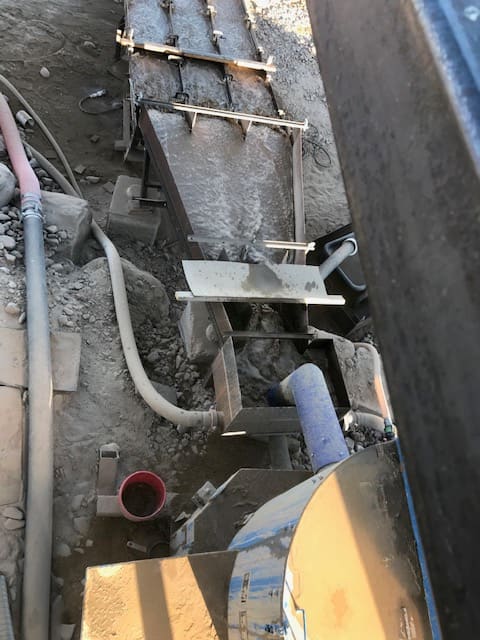
- Thin-slurry gravity. Sluices and concentrators run deliberately dilute, keeping the slurry viscosity low enough that fine gold behaves like gold again.
- A rapid thickener at the heart of the plant. Designed with a leading minerals-processing consultancy, it pulls the dispersed clay out of the process water with flocculant chemistry — clarified water back to the plant, clay to a managed solid. In dry country where every gallon is trucked or pumped, closing the water loop is not green window-dressing; it is the operating economics.
- Centrifugal cleanup. Enhanced-gravity concentrators catch the fine gold that even a well-run sluice loses, and the concentrate tells you honestly what the sluice missed.
The Lesson Worth Publishing
Season over season, the correlation was blunt: recovery tracked scrubbing intensity and water clarity more closely than it tracked head grade. A richer dig with lazy water treatment produced less gold than a leaner dig with the thickener dialed in.
There is a general engineering moral here that outlives mining. The glamorous variable — grade, in this domain — is rarely the governing one. The governing variable is usually some unglamorous piece of process hygiene that every previous operator documented, complained about, and underfunded. Reading a century of other people's failure reports turned out to be the highest-grade ground on the property.