Design Nomenclature / Composition
Gutter
Also called alley, column gap
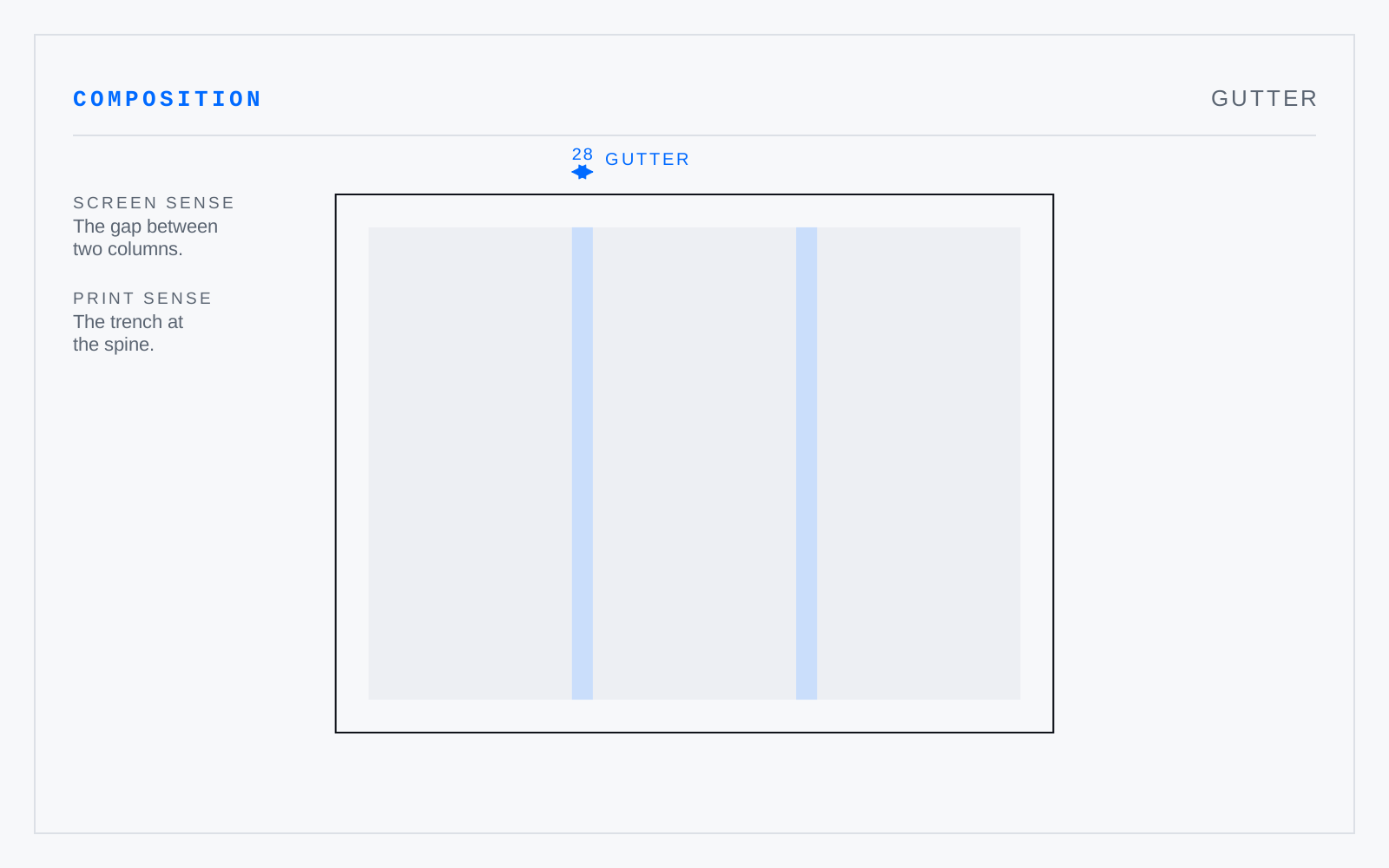
The space between two columns or two modules. It must be wide enough that the eye does not carry a line across it into the neighbour, and narrow enough that the columns still read as one field rather than two. In bound work the same word names the trench where inner margins meet at the spine.
In practice
Two incompatible senses in daily use: the gap between columns, and the trough at the spine. Print people usually mean the spine; screen people always mean the gap.
Not to be confused with
- MarginThe unmarked band between the live area and the trim. Margins are not leftover: they hold the block in place optically, absorb trim variance, and give hands somewhere to sit. Classical page canons set them by ratio, with outer and foot larger than inner and head.
- ColumnA vertical division of the live area, separated from its neighbours by gutters. Column count governs how many measures a page can offer; column width is what a reader actually experiences. Columns exist to be spanned — the useful grid is the one whose columns combine into more than one usable width.
Origin
From the water sense — a channel that carries runoff — applied to the groove formed where two bound pages fall away toward the spine, then generalized to any narrow channel in a layout.