Design Nomenclature / Composition
Margin
Also called page margin
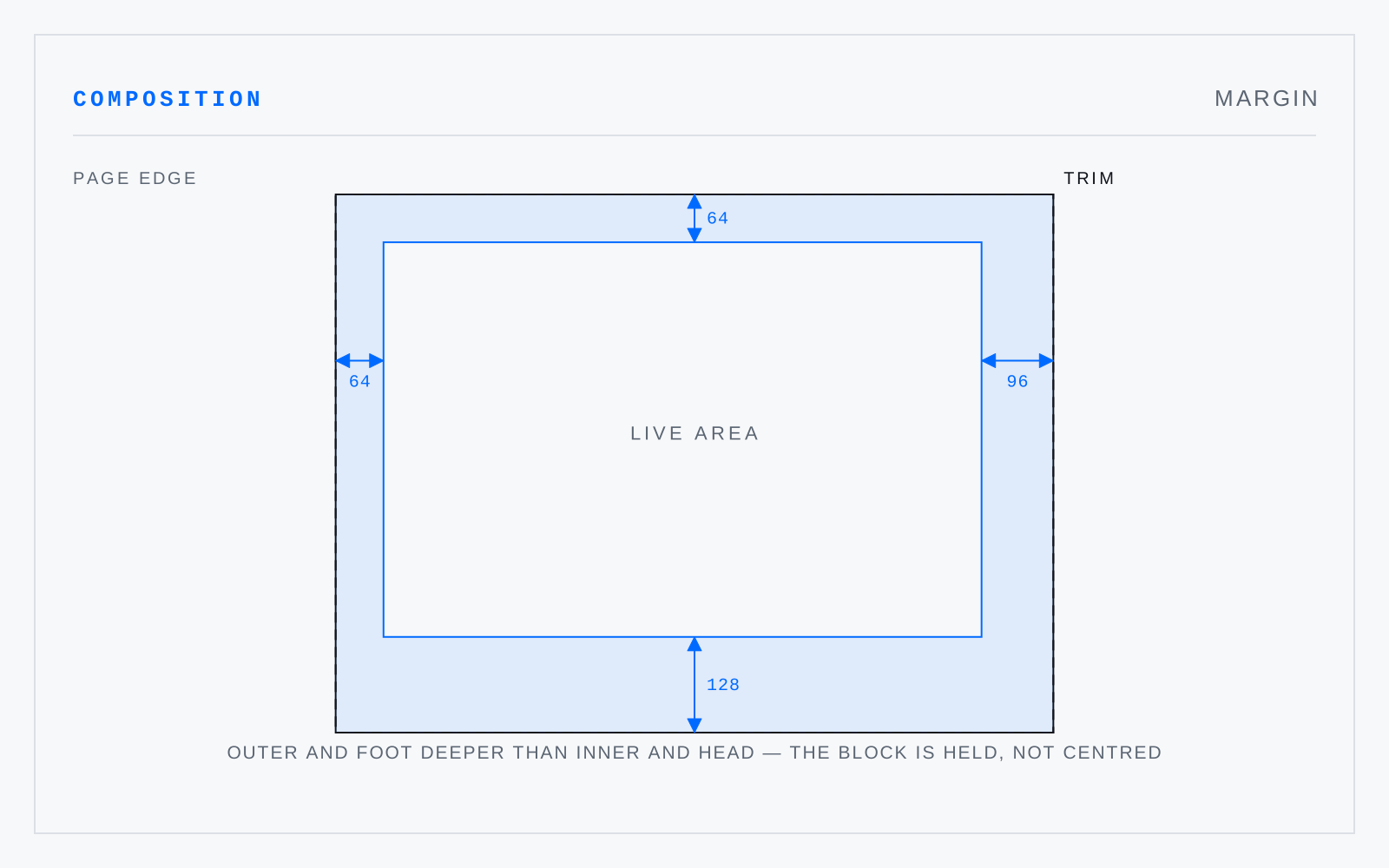
The unmarked band between the live area and the trim. Margins are not leftover: they hold the block in place optically, absorb trim variance, and give hands somewhere to sit. Classical page canons set them by ratio, with outer and foot larger than inner and head.
In practice
A margin is a designed dimension; padding inside a component is not a margin, however often the CSS property is used to fake one.
Not to be confused with
- GutterThe space between two columns or two modules. It must be wide enough that the eye does not carry a line across it into the neighbour, and narrow enough that the columns still read as one field rather than two. In bound work the same word names the trench where inner margins meet at the spine.
- Negative spaceThe unoccupied area of a composition — unoccupied only in the sense that nothing was placed there. It carries shape, groups and separates, sets pace, and is the substance proximity and figure–ground actually operate on. It is sized as an element, not left over at the end.